An Invitation

The news from around the world has been nothing short of depressing. Despite my efforts to stay in my circle of control, my mind has wandered to dark places where I feel ineffectual and untethered. Unlike other conflicts, this one is affecting us all, even if only psychologically or via our wallets. At least for now.

I was out with my granddaughter the other day, making our way down a trendy café lined street in Canberra, when I noticed a message written in chalk on the footpath. It was somewhat faded, but I could still make out the words.

What mini
adventure
could you
go on today?

Having stopped to read it, my first reaction was to laugh. Not because it was laughable, but because it challenged me to look at the day differently. I decided to take up the invitation and embarked on a mini adventure.

Haig Park was only a few minutes away. It was an obvious place to start. I pushed the pram along the path and noticed an adventure playground for kids. My little possum is too young for such adventures, so we kept going. Next, I saw a dog agility course. Who knew? Unfortunately, I don’t think my dog would be very interested, but it is good to know it is there. To my right, I saw a building I have often walked past. What was its purpose, I wondered? It turned out to be a community centre with a lovely garden, BBQ area and seating for a large group of people. I took some photos and continued the quest.

On my way back, I came across what looked like a street library. It wasn’t. The small, bright yellow wooden structure was in fact ‘The Teeny Weeny Mini Museum of Art.’ At first glance, I didn’t see anything special in the display case, only some pine cones and bits of paper. Then I saw a stack of yellow cards and had to find out what was printed on them. I opened the cabinet and, to my delight, found a card that on one side had this quote:

‘Shoot for the moon. Even if you miss you’ll land among the stars.’
Less (sic) Brown

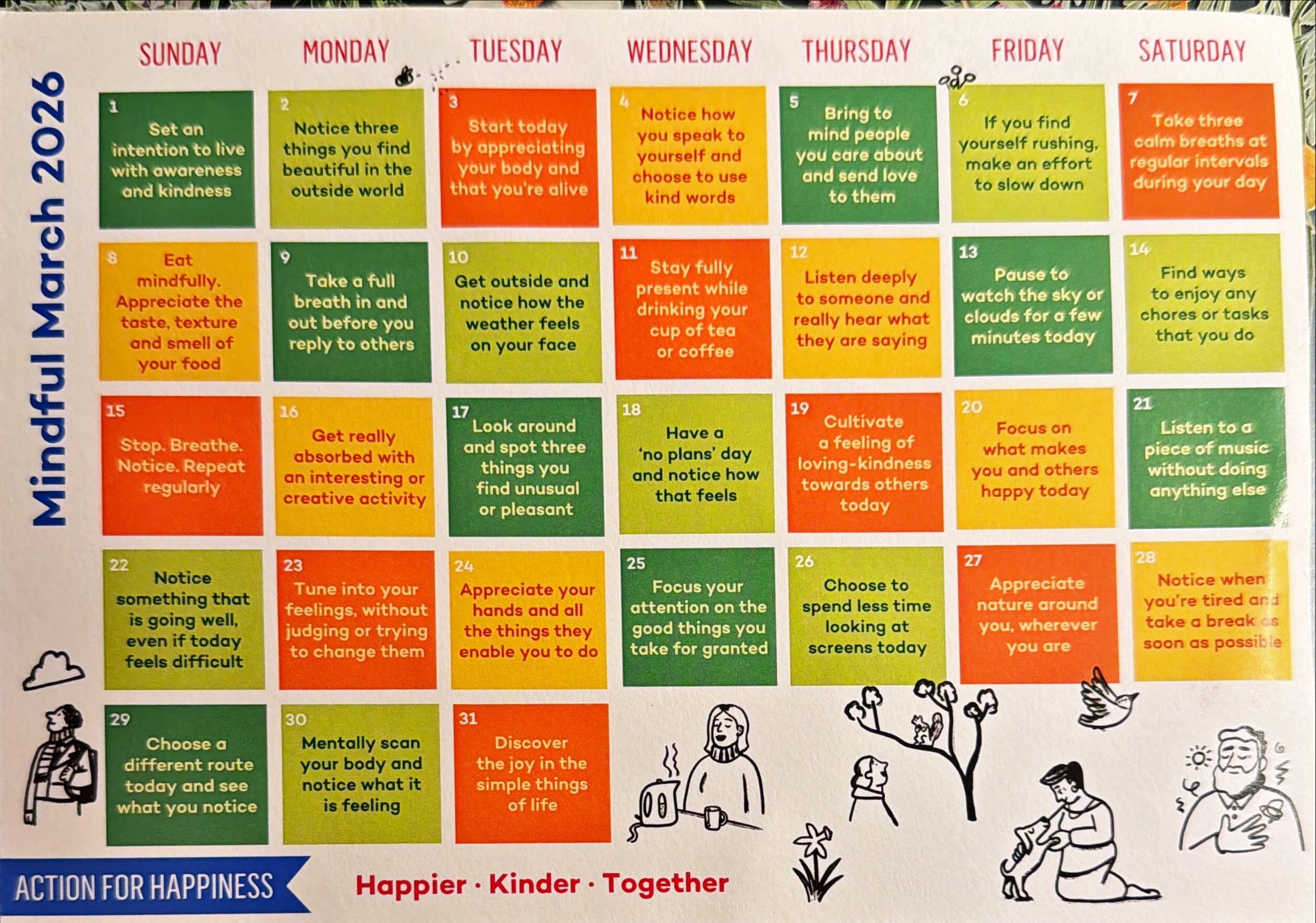
A lovely sentiment, but it was the other side that stopped me in my tracks. It was another invitation to many mindful mini adventures for each day of March. While Mindful March is almost over, I intend to keep the card and do each of these ‘Actions for happiness’ in April. My favourite one is: ‘Discover the joy in the simple things of life.’

And so I have come full circle. I was attentive to the call and followed the invitation to go on a mini adventure. As a reward, I have been offered 31 additional opportunities for joy. I share them here so you may be enticed to go on your own mini adventure. You never know where it may lead.
Dawn, Dusk and the Dangerous Crossing

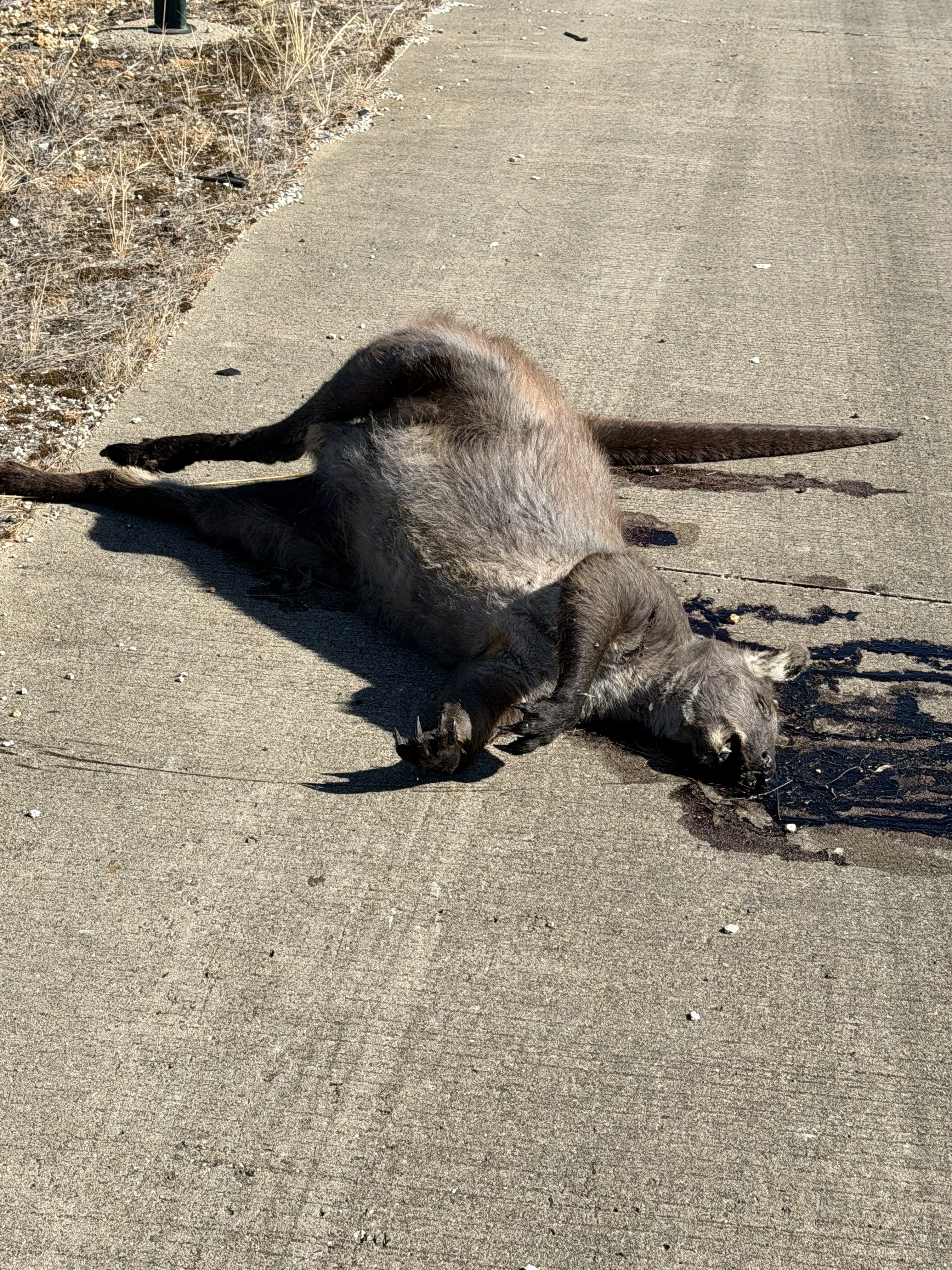
When friends come from overseas, they often bemoan that they only ever see dead kangaroos on the side of the road but never live ones. I share their unease about this road toll that seems to be accepted as a fact of life in Australia.

Until I moved to the country, I didn’t realise just how many animals are killed daily. Now that I live in Canberra, known as the bush capital, I encounter dead kangaroos, birds and wombats almost every day on my way to work. People in cars drive by, drive over, or drive around the carcasses. The animals decompose on the roadside, are eaten by crows or become odd-shaped patches on the bitumen.

According to a conservative estimate, ten million native animals are killed on roads each year. This doesn’t include foxes, rabbits or mice. As there is no national database, this figure is extrapolated from reported cases to wildlife rescue organisations and insurance claims. Many animals would simply disappear into the bush and die there.

In some places, efforts have been made to reduce this carnage. There are rope bridges for possums to cross over highways, and I’ve seen tunnels under sections of road for wombats, echidnas and other animals. However, these measures are few and far between. High fences have been erected around some roads to stop kangaroos accessing them, but these are extremely expensive to build and maintain.

Most wildlife is killed at dawn or dusk when our native animals are on the move. They’re often attracted to the greener grass at the side of the road or they’re crossing to reach water, food, or they may be looking for a mate. Their territory is often fragmented, which forces them to attempt crossings simply to get where instinct tells them to go. Barriers in the middle of the road may protect cars from oncoming traffic, but they also trap animals on the roadway with vehicles whizzing past.

My heart aches every time I see a dead animal on the side of the road. I’m shattered by the sight of a dead mother kangaroo and a joey a few metres further along, and I think about a dead bird’s mate waiting for its return. It’s easy to become desensitised when you see carcasses every few metres along a stretch of road. It becomes part of the everyday experience of driving to work or going on a road trip. But I don’t ever want to get desensitised or accept that this is how it has to be. We are needlessly putting endangered species such as the Tasmanian Devil and koalas at further risk of extinction.

While I don’t have an answer, I can only plead with drivers to slow down when animals are most likely to be on the move. If safe to do so, stop and let that echidna cross the road, or move that turtle in the direction it’s facing. If you happen to see an injured animal, call Wildlife Rescue Australia on 1300 596 457.

There are no roadside memorials dedicated to this daily slaughter. But I have my own small ritual when I see a dead animal on the road. I put a hand to my heart and breathe a breath or two in acknowledgement of their life and of the destruction we humans continue to bring upon them.