My father gave me a box of Easter eggs every Easter Sunday. He chose them carefully for their appeal and elegance. The boxes were usually silk lined and contained one large egg and occasionally some smaller eggs surrounding it. I loved receiving these eggs, but I never ate a single one.
‘The chocolate is there to be eaten,’ my father said each year.
‘They are too perfect, Papa. If I ate the eggs, all their beauty would be lost. This way I can look at the eggs and enjoy your gift for the longest time,’ I replied.
My father just shook his head as my eyes feasted on the eggs in the box before I finally took them to my bedroom to be placed on top of my wardrobe with all the other eggs from previous years. The eggs faced into the room and whenever I got dressed, I looked up at the row of stunning boxes and the eggs they contained.
My friends couldn’t understand why I didn’t eat them. Every time they came over, they’d look longingly at the chocolate eggs, but I never relented.
‘You wouldn’t even miss it if one wasn’t there,’ my friend Stephen chided.
‘Can’t we just share one?’ Necef chimed in.
‘No! I love looking at those beautiful eggs,’ I said firmly.
One late spring afternoon I decided to clean my room thoroughly. I tidied, swept, and dusted. I climbed onto a chair to take down the boxes of eggs. To my horror, all that was left of the eggs was the coloured foil, neatly arranged to make it look as if the eggs were still there. I cried tears of rage, frustration, and utter betrayal. I knew who the culprits were.
The following day, I approached my friends with righteous anger.
‘You ate all the chocolate. How could you!’ I cried.
‘What are you talking about?’ replied Necef and for a moment I doubted myself.
‘The Easter eggs on top of my wardrobe,’ I said. ‘It had to be you!’
Necef and Stephen looked at each other and began to laugh.
‘Oh, those eggs,’ Stephen said. ‘We ate those about six months ago and you are angry about it now?’
I was hurt that they had betrayed my trust, but I could see the funny side too. They knew I wouldn’t look too closely and that they’d get away with it.
That night, I complained about my friends to my father as I cleared away the cheerless, empty boxes.
‘So will you eat the chocolates next year?’ my father asked.
I shook my head. ‘No, Papa. You should know I need their charm to last all year.’
I was 23 when I first returned to Europe, to search of the girl I had left behind. The girl that I remembered was more like a character from a storybook than a younger version of myself. That trip, half way across the world in a Boeing 747, so many years before, had marked a complete break with the old world. I was never to write to anyone, never to speak German, never to mention Austria. As my father never did learn English, we continued to speak Hungarian at home. I desperately wanted to fit in. At the time, bilingualism was a social stigma in Australia and, armed with that knowledge, I decided that trilingualism must make me even more of a target. I pretended not to understand or speak a word of German.
When I returned to Vienna with my then husband and mother-in-law, I found that I had not forgotten my German at all. In fact, I could get by quite well. I had no addresses of school mates, I only knew where we had lived. I simply drew on my memory and found my way back.
We took the commuter train from Wien Westbahnhof to Pressbaum in Lower Austria. This was the same train line my father had travelled twelve years earlier on his way home from work. It took just over half an hour from Vienna to Pressbaum, the little township nestled in the Vienna woods. In my memory we had lived a long way from the city.
Once there, I followed my nose. I climbed up the steps from the railway station to where the small kiosk stood, midway between the station and the walking path through a forest. It was shut. As I looked about, I remembered it as a little oasis between home and school. This is where I had bought Twini ice-blocks in summer, holding the siamese twin pop-sticks until I could pull them apart so I had the illusion of two treats when I had paid for only one.
I had many happy memories of this small kiosk. My father had a tab there which he allowed me to freely use. On pay day, he settled his account after a couple of glasses of beer with weathered old locals whose dialects were unintelligible. I wondered where these old men would meet now. They had always had a Stammtisch – a regular table, and sat there from morning to night – or so it seemed to me. These locals must have felt as displaced as I did now, looking at the forlorn, boarded up wooden structure.
We turned left at the top of the path, walked through a small patch of forest and sought out the house where I had lived. The gate was shut and no-one stirred behind the curtains. I looked up to the second floor and thought of the kindly old woman who had once lived there and supplemented her pension by selling moonshine to her loyal supporters.
I have some photos taken in the last couple of months before our departure from Austria. Black and white, they show me holding the handlebars of an ancient bicycle in front of the gate at number 40 Bahnhofstrasse. Although I know that the child looking at the camera is me, she is a time traveller from a bygone era. I said goodbye to that girl in the photo and crossed the railway line.
Next stop was the old station masters’ cottage. The tiny two storey house stood frozen in time. Before I could ring the bell, an old dog came tottering up the path. It was Rigo. A very old dog now, his tail still had the piglet curl. I was sure he wouldn’t recognise me but my heart skipped a beat when I saw him. My handsome and faithful dog who had accompanied me in my adventures through the surrounding woods was still alive!
Then, an ancient, crooked woman approached the gate.
“Frau Deim?” I ventured.
Her eyes searched my face and crinkled into a smile. “You’ve come back!”
She unlocked the gate and my first reaction was to reach out for Rigo. He was happy to see visitors and who knows, maybe he did know who I was. After giving the dog a long pat out in the cold, we were invited in. Frau Deim apologised over and over for the state of her house. I was simply happy to see her.
In the past I never understood my mother’s desire to leave Europe behind. For years I was homesick for this place yet I could never tell anyone. Europe was a door slammed shut. My job was to face forward, embrace the New World and not look over my shoulder lest I turn to a pillar of salt. But for years I furtively glanced back, when no-one was watching. Now I came face to face with what we had left behind.
Frau Deim was the widow of a railway worker whose body was found strewn across the tracks one icy January. She kept to herself, worked hard and bought up her only son as a single mother, well before the term was coined. The only assistance she received was her right to live in the signal master’s cottage until death tracked her down.
In 1983 she was an elderly woman with few means and plenty of problems. She had no running water and was reliant on a hand pump in her garden. Then, one day she noticed a foul odour emanating from the well. She asked the Austrian railways to investigate. The water was deemed to be undrinkable. From that day, she had to boil her water for ten minutes before it could be used.
Entering the house was like entering a sauna. Water droplets formed brown constellations on the ceiling, gliding down the walls and fogging her windows. It was hard to breathe. Mould invaded every crevice and advanced with military precision. Frau Deim looked about apologetically. Her bedroom opened onto the kitchen and had suffered the same fate. Her clothes hung limp over doors, on nails and draped forlorn over her bed. The wardrobe doors were swollen and warped.
As I witnessed the pitiful fate this woman had to endure, I saw my parents’ choice to leave with adult eyes. Leaving Europe was like buying a lottery ticket. The outcome was uncertain but it had offered them a last chance of starting anew.
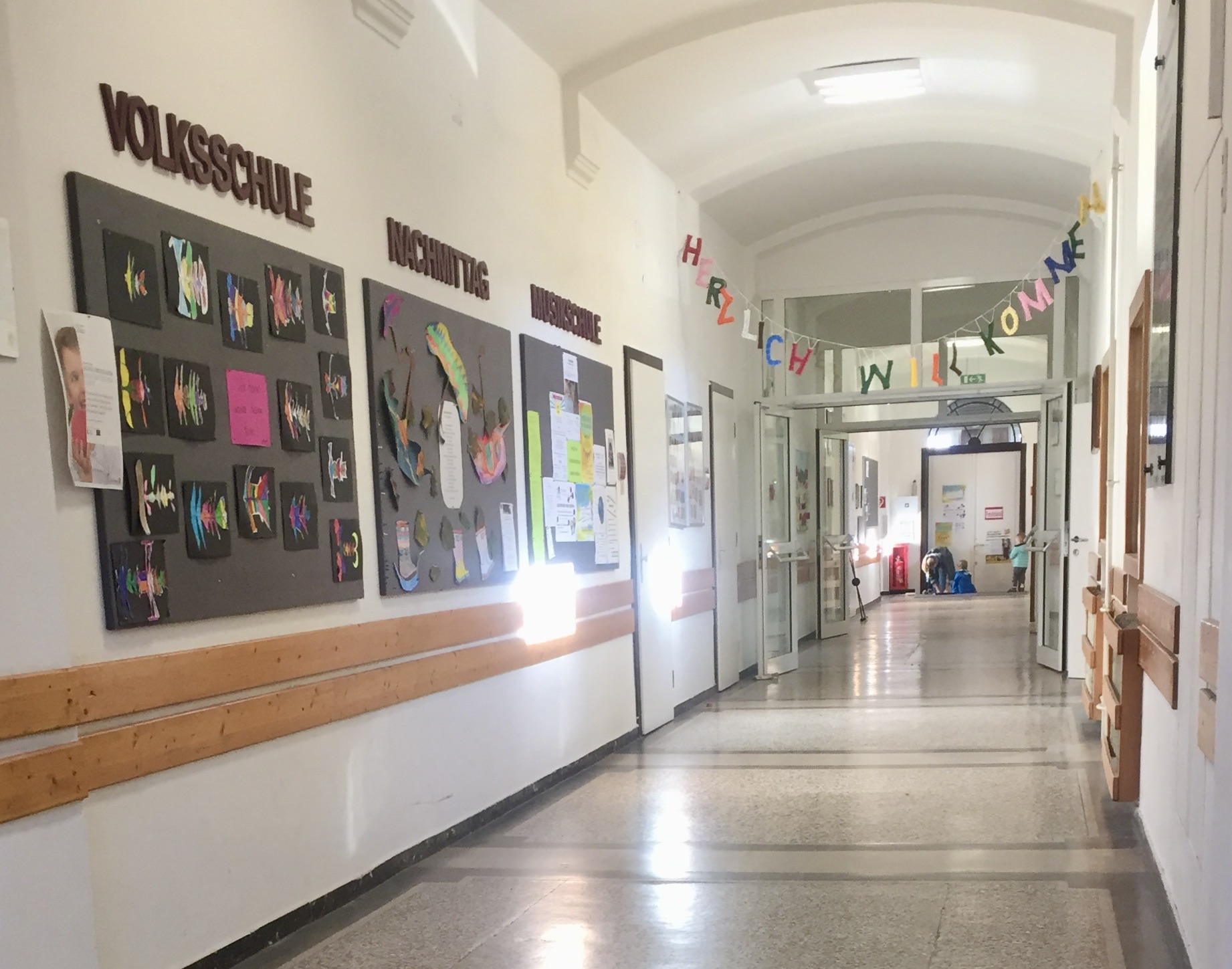
I want to go in but I can’t quite bring myself to do it. I’m standing in front of my old primary school in Pressbaum, a country town not far from Vienna. I feel foolish standing at the threshold and when someone finally comes out, I sneak in and take a few steps into the hallway. The thought of announcing myself to the office fills me with dread. What would I say? And who would care that I attended this school in the late 60’s and have traveled back to see it? I clearly hadn’t thought this through. What did I expect when I planned this pilgrimage? I take a photo and quickly leave before anyone can ask me what I am doing loitering in the corridor.
At the bus stop, I check the time table. I am the only one waiting until a boy, perhaps nine or ten, comes along and greets me. He too is waiting for the bus and without any hesitation he starts to chat. The boy tells me all about his school and how much he loves the place. I reveal that a long time ago, I too used to go to this school. I don’t go into details and he doesn’t ask. He is happy with his own chatter. ‘The music room is now a classroom,’ he tells me, ‘And the climbing wall had to be dismantled and rebuilt. Nothing stays the same,’ he says, shaking his head knowingly. I suppress my smile and encourage him to keep talking.
Clearly, he takes me for a local. At times he speaks so fast, I have to ask him to repeat what he says. This doesn’t worry him, and he continues to tell me about his life in broad strokes. He tells me that next year he will have to leave this school and he doesn’t want to go. ‘All the teachers here are nice and the school up the road is huge.’ I get the feeling he doesn’t cope well with change. Then, apropos nothing, he asks whether I’m not too hot in my leather jacket. ‘I am,’ I say and put the jacket in my lap.
The boy returns to his subject, telling me about all the changes he has seen at the school since he started there. I have an urge to tell him my story but don’t want to burden him with what happened long ago. There are so many things I could say, but I don’t. I remember visiting Sacre Coeur, the school he will attend next year. It was going to be my school too. As it turned out, a much bigger move awaited me. Australia, 16,000km away, was unfathomable and there was nothing that could prepare me for it.
As he speaks, I think about my old school I had come to visit. I can’t quite answer why I couldn’t bring myself to announce my presence. Maybe it was that I was searching for traces of that young girl I had left behind but realised that they had long been erased. So instead, I took the obligatory photograph; two dimensional and lifeless. I had made my pilgrimage and was now ready to leave. Then, a chance encounter with this boy. In him, I recognise the innocence of a bygone era. And as he speaks, I finally get a glimpse of her – that young girl of long ago, reflected in his clear, bright eyes.
From this week I will be posting some short pieces from my memoir writing. I am choosing pieces that can easily stand alone. This relates to events from when I was 15 years old.
‘Would you like to go to the beach tomorrow?’
‘I’d love to,’ I replied, already panicking about the state of my swimwear.
Alan and I had not long started spending time together. I was besotted with this tall, gentle Ceylonese boy who treated me like a princess. He was quite unlike any boy I had ever met. Alan had a quiet, measured way of talking and there was something chivalrous about him. For my part, I was trying my best to impress him in the summer of 1976.
I couldn’t tell him that my summers were mainly spent indoors. Most days I either rode my bike to the St Kilda library, where I experienced the luxury of air-conditioned comfort, or I rode over to a friend’s house where we listened to music or simply talked. The beach was the last place I went to in summer.
Alan had beautiful light brown skin, perfect for a day on the beach. I, on the other hand, had pale skin that was the height of fashion in 17th Century Dutch paintings but definitely not in Australia in the 1970s. To make matters worse, like a lobster in boiling water, I started to scald if I stayed in the sun for longer than twenty minutes.
But back in my mid-teens, I was determined to cheat my European genes. I poured on the coconut oil and headed to the beach with Alan, wearing nothing but an orange bikini and a towel slung over my shoulder. After a couple of hours lazing in the sun, Alan began to look worried.
‘You sure you’re OK in the sun? You look kinda red.’
‘Don’t worry, that always happens when I get hot. I just need to go back into the water and cool down,’ I replied, wishing it were true.
‘If the sun’s too much, we don’t have to stay,’ Alan said gallantly.
’No, no, it’s fine. I’m having a great time,’ I said, and that was true. I loved all the attention I was getting.
Alan dropped me back home late that afternoon. We made plans to go out the following Saturday to the Palais cinema in St Kilda. There was a rare showing the Woodstock music festival documentary. I was keen to see the film and even keener on spending an evening with Alan in the darkness of the cinema. It sounded promising for our burgeoning romance.
By the time my father arrived home from work, I had a throbbing headache. Every part of my body felt hot and dry. I was trying to suppress the urge to vomit as I felt the room shift under my feet.
‘Good God, what’s happened to you?’ My father said, as he dropped his briefcase at the door and reached out his arms to catch me.
I had been holding in the pain ever since had Alan left. Now I just buried my head in my father’s chest and sobbed.
‘Don’t touch me!’ I yelped as he put his arms around me.
‘C’mon, let’s have a look at it,’ he said.
We peeled my top off. I was so sore that the only thing I could do was to lie face down on my bed wearing nothing but my undies. I couldn’t even endure the weight of a sheet over me. My father found some Nivea creme and tried to put some on my back. The pain was excruciating; I couldn’t bear his touch. Somehow I fell asleep lying on my stomach. By the next morning my shoulders, back and legs were blistered and even more painful than the night before. I could barely move.
My father went to the chemist and returned with a burn spray in an aerosol can. It looked like pink shaving cream and offered some welcome relief. I think I must have stayed in bed for two full days and struggled to wear anything but a loose cheesecloth top. By the time Saturday arrived, my blisters had burst and I could sit gingerly on a chair as long as I didn’t lean back.
‘I don’t think you should go out tonight. Your back hasn’t healed yet and I can see you’re in pain.’ my father cautioned.
‘I’ll be OK, Papa, I’ll take some Panadol before I go.’
My father just shook his head and didn’t say another word.
That evening, when Alan arrived, I put on a brave face.
‘Are you sure we should go?’ Alan asked, full of concern.
‘Of course! I’m ready, aren’t I?’ I snapped.
Alan and my father looked at each other. Without a common language between them, they reverted to universal sign language. My father lifted both his hands, palms facing forward and shrugged his shoulder. Alan nodded his head and his gentle brown eyes conveyed that he would look after me.
I hobbled to the car, sat carefully on the front seat and did my best not to lean back. I held the seatbelt away from my shoulder and asked Alan to drive slowly, especially over any bumps. When we arrived, Alan had to lift me out of the car. At the Palais, we sat in uncomfortable wooden seats with arm rests that jabbed into our ribs when either of us tried to lean across. Alan carefully put his arm around me and I was glad he couldn’t see me wince.
I remember the film well. The music transported me to the long lost America of the late 60s, where a counterculture promised a new age of peace and free love. I wished I could have been born a few years earlier to experience it firsthand. But with my back still raw and weeping from burst blisters, what I longed for most on that big screen was the joyful abandon of naked bodies in mud baths as the rain came down. I so wanted that soothing shower to soak my clothes and feel the cool thick mud cover my sunburnt body as I leant over to finally kiss Alan.
Before I moved to the country, the only agricultural show I had ever visited was the Royal Easter Show. As a child I went along for the rides and as an adult, I went to take my daughter. I never paid much attention to the agricultural displays and probably only watched the sheep dog trials.
Since I have been in the Central West of NSW, I have been to at least one if not three shows each year. Admittedly, I first started going because the children at my school had entered artwork but once there, I began to understand that each town’s show has a slightly different flavour and that the locals have great pride in the competitions they run on the day.
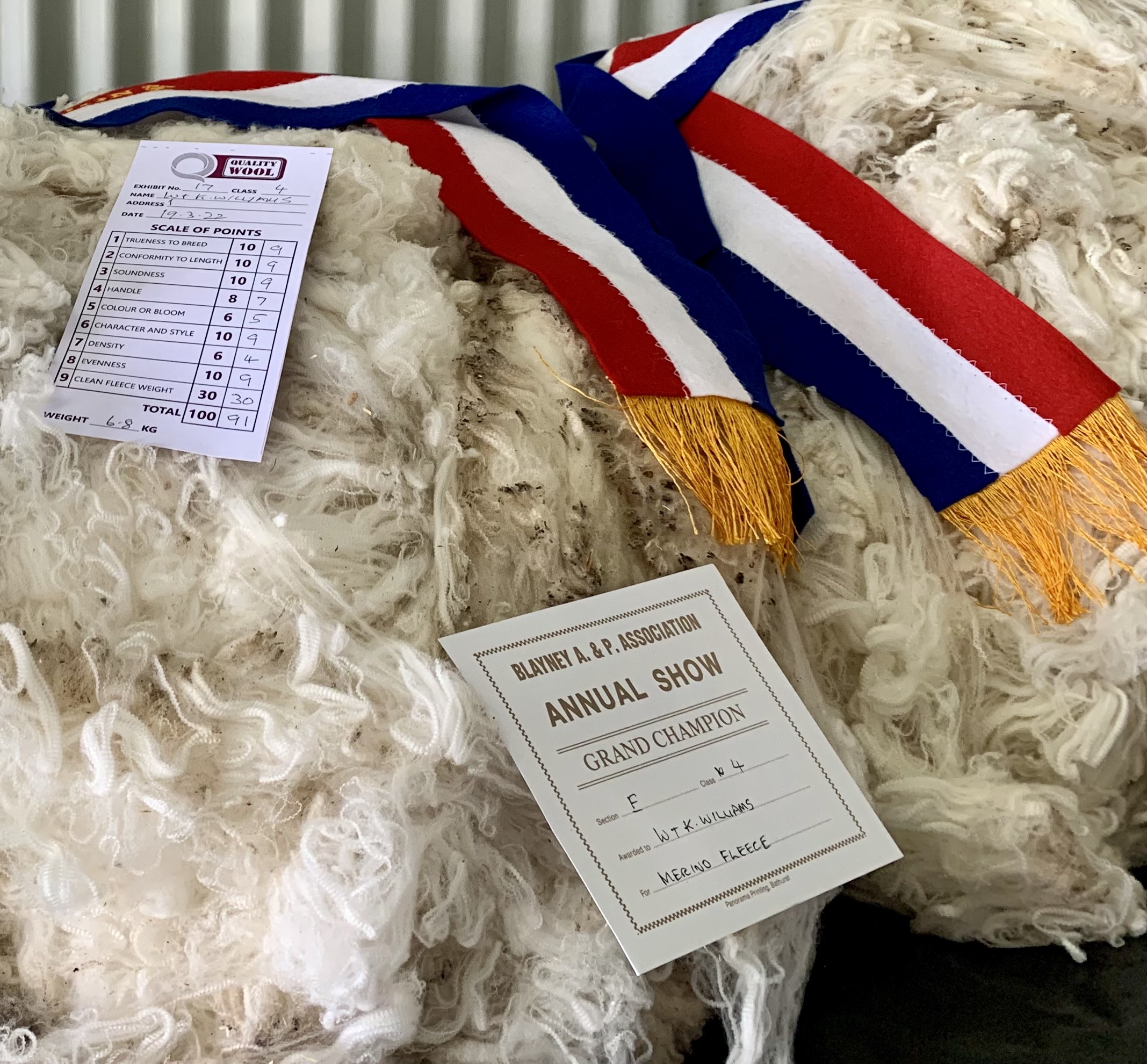
The Blayney show was founded in 1878 and this year was the 144th annual show. Not even Covid could stop the show. Somehow, they managed to run the event just before the lockdowns of the past two years.
Volunteers run the show year in, year out. I have met members of the organising committee who have committed their time and organisational skills for decades. It is mainly retirees who volunteer on the day, and many are glad to share a story or two with anyone willing to listen.
I missed the sheep dog trials in the morning, but I did see the pedigree dogs lining up to be judged. There were some stunning dogs among them and of course some that I couldn’t quite warm to. What I did enjoy was watching young girls handle their dogs expertly in the ring as they competed against seasoned adults. It must take a lot of work and courage to prepare for such events.
While there were no boys entering their dogs, there were plenty of young chaps handling cattle. They all wore cowboy boots, checked shirts and large hats, emulating their fathers. Even their walk was the swagger of an older man as they made their way to and from the sheds. While amusing on one level, it did display the strongly gendered roles that are still evident out in the country.
There were stunning horses of every colour with coats that glistened in the sun. Their tails were either beautifully brushed or plaited. Horses are magnificent creatures to watch and once again, there were many young people who were entering these events.
I found it fascinating to walk through the wool, vegetable, and poultry sections. There were ribbons on some entries indicating a first or second prize. I often couldn’t tell the difference between one bird or another or one fleece from the other. I don’t understand the judging criteria nor what to look for in these categories. These are clearly specialised skills that people have developed over many years.
I am but an outsider looking in at a tradition which I don’t really understand. I saw people catching up with each other, possibly for the first time since the last show and appreciate that these shows build social cohesion in a community. I also saw many older people volunteering and exhibiting but also some young ones taking an interest in the competitions. I wondered whether the younger generation would continue to volunteer their time and build up the skills needed to run the show.
Judging by the number of cars and the crowds, the attendance was high. But money is tight, and I saw many stall holders without customers to buy their wares. There’s also the issue of a changing population. Some country towns are in steep decline while others have become popular with urban dwellers looking for a different lifestyle. These ‘blow-ins’ are a bit like me, they have come from the city and have made a choice to live in the country where the pace is slower, the air is clean and property prices are still somewhat affordable. I wonder whether they will embrace the traditions of the bush or see them as a quaint hangover from yesteryear.
While my father was politically progressive, he held some conservative views about women. For a woman’s life to be complete, she would have to find a suitable husband. This is why he was perturbed that I wasn’t interested in learning to cook. I was also untidy and couldn’t even sew on a button.
‘What will you do when you get married?’ he’d ask.
‘I’ll marry a cook,’ I’d reply or ‘I’ll marry a tailor.’
He’d shake his head and no doubt wonder what would ever become of me. Clearly, I was unsuitable as a traditional wife.
‘You need a mother,’ he’d say sadly. ‘I’m not up to it.’
‘You are my Mapa,’ I’d say, ‘both Mama and Papa and that’s enough for me.’
Sometimes he would attempt the awkward conversations about bodily functions and sex. As I was equally uncomfortable talking to him about this, I would quickly say that I already knew all there was to know and stop the conversation before it had the chance to begin. I could sense my father’s relief as he returned to safety of discussing dinner or what we would watch on TV.
Menstruation was definitely a taboo subject. I would ask him for money to ‘go to the chemist,’ a euphemism for getting sanitary pads. Nothing more had to be said. I’d go to the local chemist, wait until the pharmacist was busy and then approach the female assistant to ask for the product I was after. Sanitary pads were always wrapped in plain paper bags and sticky taped so that no part of the original wrapping could be seen. This drew as much attention to them as if they had been handed over the counter in their original packaging. Everyone knew what the brown paper bag contained.
After some time, our toilet became blocked we had to call a plumber. This is when I learnt not to flush the used pads. I developed a way of folding them neatly and wrapping them in toilet paper, which I then took out to the bin. I was meticulous about this. Nonetheless, one day, I must have been distracted and I left the wrapped pad wedged between a pipe and the gas hot water heater. I simply forgot about the package.
My father’s face was steely when I came home that day. I knew I had done something wrong but no matter how hard I thought about it, I couldn’t work it out. I went through a mental checklist of misdemeanours, but none would have explained the expression that greeted me.
‘I found something disgusting belonging to you today,’ he said.
I still had no idea what he was talking about.
‘I went to the toilet and found a little parcel. I didn’t know what it was, so I unwrapped it. Let me tell you, no man should ever see such a sight. It is disgusting. And I never, ever want you to leave such a filthy thing in my sight,’ he said.
It felt as if I would die of embarrassment. Boys at school were merciless in harassing girls about their periods and now I was told off by my father for something I had no control over. I wasn’t particularly keen on having my periods and now I had to endure my father’s wrath as well.
‘I just forgot, Papa, that’s all.’
‘I don’t ever want you to ‘just forget’ again,’ he said.
I went to my room and felt ashamed and dirty.
I had forgotten about this episode until I was watching the 2021 Australian of the Year awards. Isobel Marshall, a 22-year-old Adelaide woman was invited to the stage and began to talk. On national television, in front of the Prime Minister and other dignitaries, she spoke eloquently about the stigma of menstruation. She was voted Young Australian of the Year for not only developing ethically sourced sanitary products but also for her work in helping to end period poverty, a term used to describe the lack of access to sanitary products. I felt so proud of Isobel and her friend and business partner Eloise who are challenging society’s views on a fundamental aspect of every woman’s life. As she spoke, I remembered my shame and wished she had been there for me for those awkward teenage years.
I haven’t taught a class of children in a while as I now work mainly with teachers. But as part of the government’s Covid response plan, I was called upon to teach in a primary school for a couple of days. I was both nervous and excited, just like I used to be when summer holidays were coming to an end.
I arrived at a beautiful small country school where the principal greeted me warmly and accompanied me to my class. ‘The class teacher is at home in isolation. This class has had a series of teachers all week and we couldn’t find any casuals at all for today and tomorrow,’ she explained. This is never great for young children and even worse when there is a child with special needs in the class. The principal was especially concerned about a child who didn’t deal well with change and really needed structure and consistency. It was at that point, that I decided to follow the teacher’s routine as closely as I could and not deviate too far from her plan. It was more important to keep the class settled than to trial some ideas I have been working on in my role as a literacy specialist.
A young boy greeted us at the door. ‘Are you going to be our teacher?’ he asked. He couldn’t see my smile under my mask, so I answered, ‘Yes, and I’m going to be here tomorrow too!’ Together, we entered the classroom. He asked enthusiastically whether he could put up a visual timetable for me and proceeded to go through the hundreds of little cards until he found the right ones for the day. I could see that if I played my cards right, he would become my ally and helper. Within a few minutes we became firm friends, and he was as good as gold for the two days that I had him.
The rest of the class arrived, all eager, wondering who this new person was. It is a hard gig being a casual teacher and it isn’t one I thought I would like. The kids, however, were very well-mannered and keen to show me how their class worked. Of course, it didn’t take long for some of the children to see how far they could push a ‘newbie’ but all I needed to do was to look sternly in their direction or make a stop sign with my hand for the message to get through. My behaviour management bag of tricks came flooding back – stand in silence and wait for the class to settle, count backwards from five, use clapping rhythms and stand in close proximity to a child. It all worked like a charm.
On Friday, I was asked to choose two children for assembly awards. It was a difficult choice to make. This was to be their first assembly together as a group since some of the Covid restrictions had been lifted. The excitement was palpable as they stood for the national anthem and said one of the most heartfelt Acknowledgements of Country I have ever heard. A teacher had clearly worked very hard to come up with a meaningful Acknowledgement in child friendly language. I stood straight and tall, proud to be part of this community, even if only for two days. It confirmed, once again, my staunch support of public education.
I even enjoyed going out on playground duty again. Within a couple of minutes, I tied a shoelace, something I haven’t done for quite some time. There is so much to learn about the culture of a school out in the playground. At this school, there were painted markers on the trees to indicate how far students could safely climb. They were even allowed to build ‘bases’ out of fallen branches and twigs. What a refreshing idea! I remembered working at a Sydney school where the large playground lacked even the barest vegetation and climbing anything was strictly prohibited. There was no playground equipment (too dangerous), no shade (a branch may fall from a tree) and out of sheer boredom kids found their way into all sorts of mischief.
I admit I was dreading the sport session on Friday. It really isn’t my strong suit. As it turned out, the children were good humoured about an activity I had chosen and then suggested a game they called ‘castles’ which was clearly much more fun. They taught me the rules and off they went, organising themselves. I did have to intervene occasionally as the game became too intense, but mostly they had it all under control.
Friday afternoon came quickly. I waved the kids goodbye as they ran into their parent’s arms or waited for the bus to arrive. I recalled what it was like when I had to leave my class in the hands of a casual. The good ones cleaned up, marked their work, and left me a nice note. The others left the room in a mess with a stack of marking for me to complete. I wanted this teacher to have a positive experience when she came back. So, I returned to the class, marked the books and homework, and wrote a friendly note.
I love my job as a Literacy Specialist but sadly, in the past two years, I haven’t spent nearly enough time in schools. It is always a great privilege to observe how different classrooms operate and see firsthand the pressures that teachers face daily. In my position, I encourage teachers to question what they do and promote a change in pedagogy, if required. I may suggest trialling new ways of working based on the latest evidence. Yet there is often little support to allow this to happen in a busy workplace with no additional staffing resources. Spending a couple of days in the classroom brought home some of those pressures. I have nothing but respect for teachers who work hard each day and often late into the night not to mention weekends. I honour their commitment to the children they teach, often at the expense of their own families. For this and many other reasons, I was glad to be able to help a school, and by extension a teacher, in need.
Patience is a virtue, but it isn’t one of mine. I’m impatient with anything that doesn’t move swiftly: queues, customer service, furniture assembly and meetings are at the top of my list. Waiting to be served I fidget or jingle keys, but when I catch myself, I offer a fake smile not to appear rude. Yet within me, a war is raging. I’ve learnt to stop, observe, and breathe. While this helps, it doesn’t stop the impatience rising the next time I am triggered.
It’s not a character trait I’m proud of. I worry that with the build up of pressure the cork with pop and the banshee will be released. The handful of people who have come face to face with this unbridled demon will attest to its horror. I’m impatient with almost everything, but most of all I am impatient with my own shortcomings. Yet there are situations where I act completely out of character and display the patience of Job.
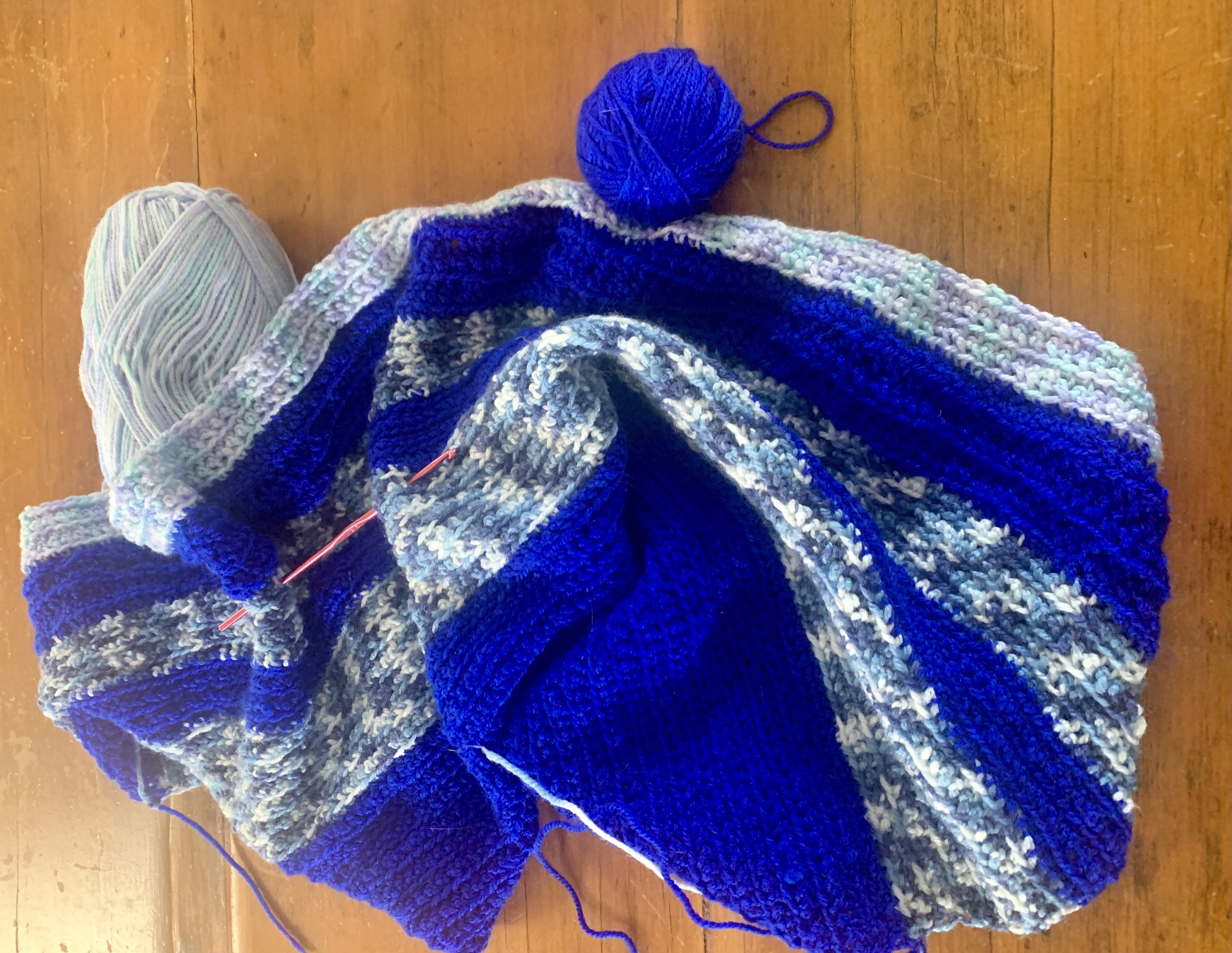
Take a shamble of tangled wool for instance. Without the slightest hint of irritation, I search for the end of the yarn and slowly begin to trace the strand through one loop after another to set it free. I don’t tug or pull, display no frustration, just a clear focused mind to get the job done. I don’t profess to understand this inconsistency of my personality. I just see it as one of my more likeable quirks.
I have learnt to unravel wool early. When a jumper became too small, my mother would unpick it. I had to sit, arms outstretched, shoulder width apart for the yarn to be wound around them. This helped to unkink the wool. I was told to stay still, keep the tension tight until the last strand was passed to me. I then laid the wool down carefully and began to roll it into balls, so my mother could knit me a new garment.
All this came to mind this morning when I was greeted with yarn from one end of the lounge to the other. I looked at the culprit but recognised it was my fault. I should have known. My dog finds wool irresistible, and in the past, I have found dismembered skeins winding through the kitchen and out the doggie door, as if attempting a futile escape.
I felt irritation rise as I picked up my latest project from the floor. Luckily, it was still attached to the mangled skein. It took some time to find the loose end. Slowly, I began to wind the wool over three middle fingers on my left hand. I wondered at that moment how many people would still know how to turn this mess into a ball, ready to start again. I prised the tightly wound strands from my fingers and began winding the wool vertically, making a small cross. Then, moving the fledgling ball a quarter of a turn to the left, I wound on more wool, moved the ball another quarter of a turn and repeated the process. Eventually, a perfect sphere of wool emerged. This ball had to be passed through the many twisted loops it encountered, one after the other until it arrived back at the last stitch of a completed row ready for the real work to commence.
The secret to unravelling tangled wool is to loosen the knots one by one until there is space for the ball to pass through. This may sound easy but requires considerable patience. It occurred to me that this process is a template for unravelling any messy situation. The key is gentle prodding, teasing, and pulling at the knotty problem, this way and that, to allow enough space for a solution to emerge. Even the smallest gap allows the golden thread to pass through until the next blockage is encountered. Then, it is a matter of repeating the process until there is enough leeway for the resolution to be able to surface. Slowly but surely, the gentle art of unravelling creates the space to solve even the curliest of problems.
My half-completed blanket is now safe atop a chest of drawers. The crochet hook awaits my hands. This project is going to take longer than I expected. Much longer. Yet I don’t mind. I marvel at my inexplicable patience and wonder what I can learn from this experience. Maybe it is as simple this: Whatever unravels in my day has a thread I can follow. If I can find the patience to approach the task with an artisan’s sensibility, I don’t have tie myself into a Gordian knot.
Recently, I completed a mosaic tray, a bright little piece to give me cheer. As grief strikes, and I am once again drawn to mosaics to make sense of my world – piece by piece, working at ground level, only understanding what emerges from a distance. I am keen to start a major piece, one that will absorb me within it. It is slowly taking shape in my mind and one day will emerge in fullness to adorn my home. It will, once more, be a testament of love.
Mosaics are time consuming. From drawing the pattern, through to cutting or smashing tiles and then finding the pieces that fit together, it is a labour intensive process. Not every fragment fits neatly, and there are always pieces left over. I never discard these, as they may become invaluable in a future project.
In some ways, mosaics are similar to jigsaw puzzles. You always have to find the fitting piece for the picture to emerge. You also need concentration, turning the piece this way and that to see if it works here or there. Tile cutters can help with nibbling away at a piece which is too big but glass tiles easily shatter, which makes the process a painstaking exercise.
While smalti glass is my preferred medium, I also like working with bright ceramic tiles. Smashing these with a hammer can be therapeutic. It is ironic that a perfectly good tile has to be broken to be reassembled in new ways for a picture to reveal itself. No wonder I am always drawn to mosaics when life has dealt me a blow. At first, I am in free-fall and then, crashing to the ground, I lie broken, contemplating the pieces, wondering how they will fit back together in a new life I will fashion.
There are pieces I will always keep, pieces I discard, and slowly a picture emerges, full of new possibilities and promise of beauty. These pieces are ephemeral, their existence attested by words and sometimes not even that. They are elusive, passing through my mind, waiting for my next move in their reassembly. Is it any wonder I am drawn to mosaics? Holding a tile, I can feel its shape in my hands and my eyes can see the image emerge. I like that I am working with something concrete that has both contour and weight.
The tray I have made is simple and naïve. It suits the season and my mood. The childlike simplicity allows me to play for a while and contemplate what will come next. Within it is the promise of growth. It allows for something larger and considered to emerge in my mind.
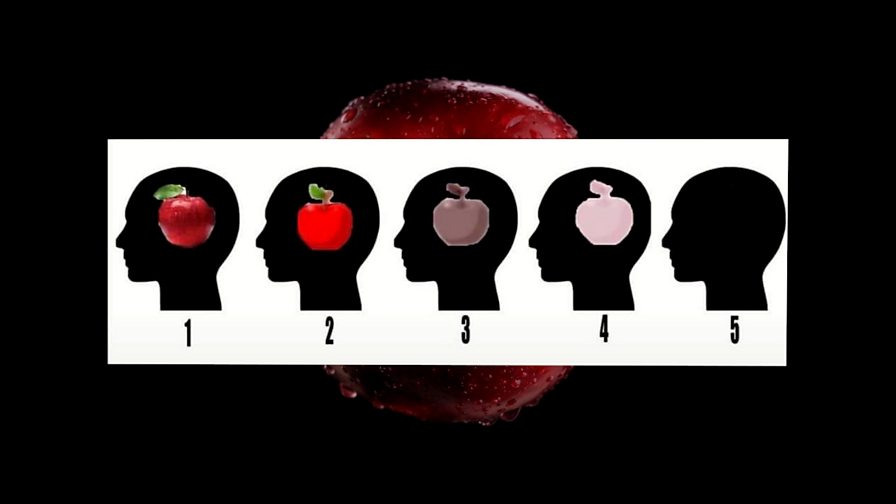
Aphantasia is a pleasant-sounding condition except that it isn’t. It refers to the inability to make mental images. If you close your eyes and can picture your bedroom, you are part of the 98% of the population who can create mental images at will. I belong to the other two percent.
When I close my eyes, I see black. I am unable to call to mind my daughter’s face, my house or even what I am wearing. This also feeds into my inability to recognise faces, especially of people I don’t know very well. I make up for it by smiling and never using people’s names. I have had many a conversation with people who clearly know a lot about me while I remember nothing about them.
Professor Adam Zeman who coined the term aphantasia, described it as a “fascinating variation in human experience.” This may be true for an academic looking in dispassionately, but it isn’t how I feel about it. I experience it as a loss; a door shut to a world I would love to inhabit. Imagine not being able to recall the face of your parents, people you love, loved ones who have died. Without a photograph, I am lost.
Strangely enough, I dream in technicolour, and it is the only time I can see loved ones in my mind’s eye. I do wonder why I can access images in my sleep but not when I am awake. I even will myself to dream about a lover I miss, just to see his face once more. It never works. My subconscious is random access only.
I first realised I had no mental images when a friend at high school showed me a piece of art she had created. I couldn’t work it out. ‘This is what I imagine the inside of my mouth looks like when I am kissing,’ she ventured. ‘What do you mean?’ I asked, confounded. She patiently explained the range of images that went through her head, while I saw nothing but black.
In my twenties I went to ‘relaxation classes’. I became increasingly frustrated when the instructor said, ‘Close your eyes. Now imagine walking along a sandy beach. Waves are gently lapping at your feet and there is a cool breeze caressing your face.’ While I love beaches, I can’t form an image of the sea, nor can I hear seagulls or feel the sand under my toes. These exercises served only to make me feel frustrated and tense – not the intended outcome of the class! When I tried to explain my problem, I was told to try harder. That’s like telling a blind person to look more carefully next time.
Aphantasia does have its funny moments though. Once I called home for a recipe I wanted to pass on to a friend. ‘It is in the red ring binder on the right-hand side of the page’, I said confidently. It wasn’t. The folder was blue, and recipe wasn’t where I thought it was. Then there are times when people ask me to describe what something looked like. I just stare blankly, and they inevitably get frustrated with what they perceive is my lack of attention. I sincerely hope I will never be called up as a witness in a court of law.
Since my memory has no pictures at all; everything is stored in words. I am always amused when people tell me that my writing is vivid and that they can see exactly what I am describing. I wish I could. For me, words evoke feelings and that is what I get out of reading a descriptive passage or a well-written novel. I have no idea what the character may look like but I am invested in their personality or how they react to situations. Sadly, I forget a lot of what I have read but I always remember the feeling I had when reading the book.
As it is with many long-term conditions, the brain learns to compensate. Mine has allowed me to gain a rich vocabulary to make up for my non-existent visual memory. I love words, playing with them and rolling their sounds around in my mouth. I will search endlessly for an appropriate synonym, checking nuances before choosing the right phrase, for I paint pictures with words for others to see. I just wish, for once, I too could have access to this miracle of the mind.





 From Quill to Quote