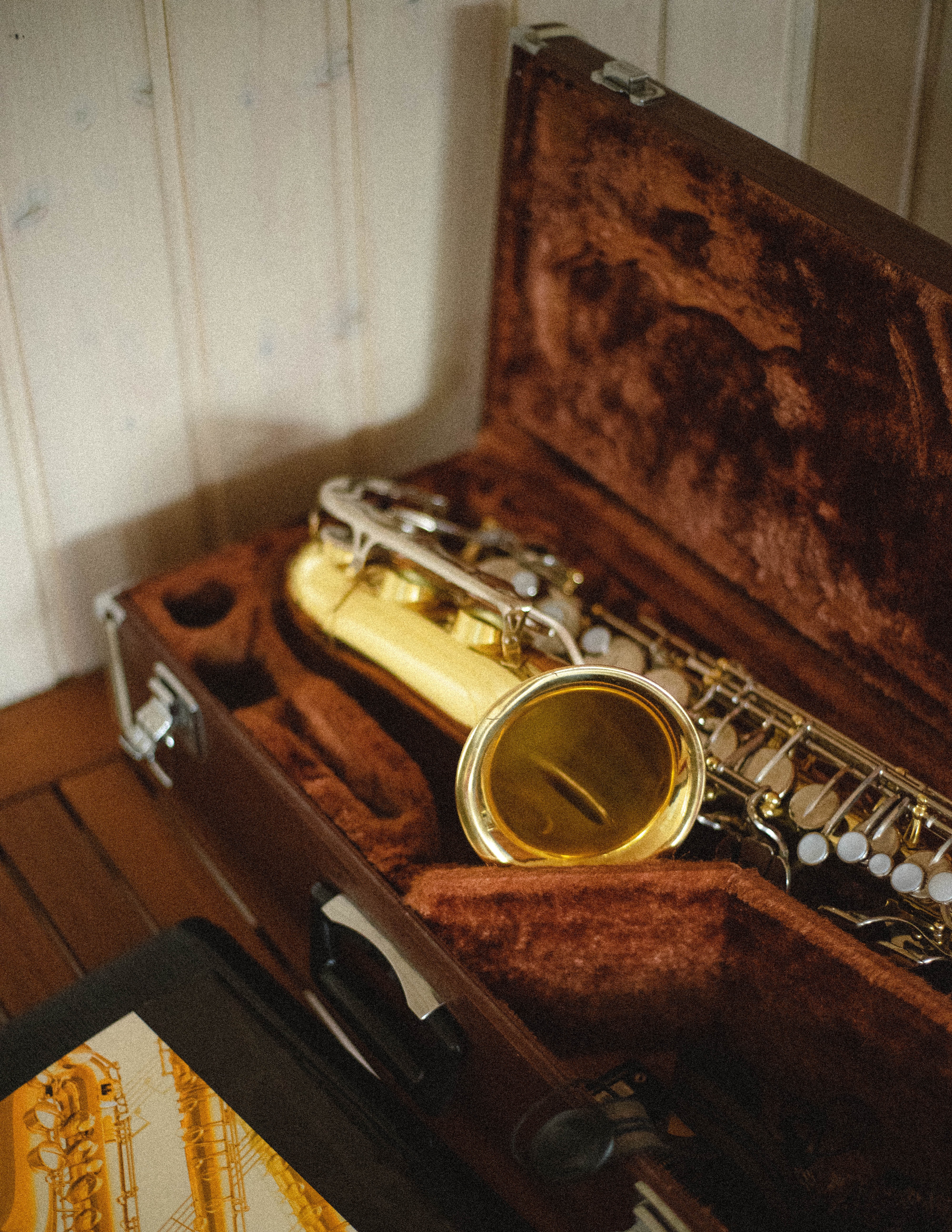
I am fascinated by memoirs and biographies. When reading novels, we understand the need to suspend disbelief, but true stories are often stranger than fiction. Take the life of Adolphe Sax who invented the Saxophone. If an author had made him the protagonist of a novel, we would think they were prone to exaggeration.
Born in 1814 in Belgium, Sax was accident prone. It strikes me as implausible that the man could have lived to the ripe old age of 80. He was hit on the head by a cobble stone which sent him careering into a river, yet he didn’t drown. He somehow survived poisoning several times over after drinking acidic water which looked like milk. He came close to dying several times, sleeping in rooms where furniture varnish was left to dry. He fell onto a hot frying pan, burned himself again in an explosion, swallowed a pin and fell from the height of three storeys onto his head. Yet he survived them all, invented the saxophone, and for his troubles lived out his life in penury. Voltaire may have pulled off such a ridiculous plot but not many others could.
This is what I love about people’s lives. The twists and turns, sliding door moments, disasters and moments of divine intervention that are both implausible and believable at the same time. We trust in them because we have experienced something similar in our own lives. We run into an old friend thousands of kilometres from home, we meet a stranger who is destined to be the love of our life or conversely, an accident turns our life upside down. Our experiences are joyous, humbling, exhilarating, painful and unfair, but they all allow us to learn and grow.
Reading a memoir gives me a window into someone else’s struggle and the lessons they have learnt. Writing my own memoir allows me to reflect on my own experiences and try to make sense of them. We are meaning making creatures and we need our personal narrative to make sense.
There are many disciplined writers, but I am not one. There have been weeks, sometimes months when all I have done is to agonise about writing but get a single word down. And then there have been times when I have found that magic state of flow. Inevitably, a busy period at work throws a spanner in the works and I fall out of the habit.
A few months ago, my friend Margaret Paton, who single-handedly organises the Central West Writers’ Group, put up a post on our Facebook page.
Writershour.com – Daily Writing Sessions. Brought to you by London Writers’ Salon.
I was intrigued. It took me a while to work out that there were in fact several writers’ hours, all held between 8 and 9 am around the world. The one in London is between 5pm and 6pm Australian Eastern time, while the New York hour comes on at 10pm to 11pm. As I am night owl, I tend to catch the New York session but sometimes I am lucky enough to be home by 5 to take part in the London session.
The concept is deceptively simple. Writers log onto Zoom at the specified hour, a host mutes the conversation and welcomes us all. There is an explanation of the process: we are to type our intention for the next 50 minutes into the chat pod and some of these are read out. We may be sitting isolated from each other yet there’s a definite feeling of community. We are all comforted by the couple of hundred people sitting in their own space, all engaged in the writing process and experiencing similar struggles and joys.
The host reads out an inspiring quote, we raise a glass of water or cup of tea and off we go, keeping our cameras on for extra accountability, or not. After fifty minutes, a voice gently invites us back into the ‘room’. We use the chat pod to say how we went, whether we reached our goal for the hour and how we felt. One or two people are randomly chosen to report back before we say goodbye. It is as simple as that.
Since coming across the London Writers’ Salon, I write every day. I am beginning to recognise faces and love the way we encourage each other. I feel part of this wonderful world-wide community and best of all, I have written many thousands of words. I only wish I had come across the London Writers’ Salon when they first went online during lock down. Since then, they have grown exponentially. There aren’t many positives I can point to when it comes to Covid, but the Writers’ Hour is definitely one. I have finally found my community and reawakened my enthusiasm for writing.
For the past three years I have struggled with writing my memoir. Within a few months of regularly attending Writers’ Hour, I have completed my first draft and I’m now using my daily writing habit for editing. I never thought I could say that I’m looking forward to when my book is published. Thanks to the London Writers’ Salon, that day is now within reach.
Every night I walked to our closest phone box and dialled 809 409, Janet’s phone number. I hopped up on the bench where the phone books were kept and steadied my feet against the opposite glass wall. I was quite comfortable sitting there and could easily talk for three quarters of an hour as long as adults didn’t come along trying to make a call. I ignored them for as long as possible and relied on my dog Scooby to dissuade them from banging on the door. I can’t for the life of me remember the things we talked about, but I suspect we told each other the minutiae of our day and made plans for the Elvis movie we would watch on the weekend. All this was mine to enjoy for 5c.
We alternated the weekends we spent at each other’s places. Janet would come to my place, and I would spend the next at hers. We had to take two trains and walk a good 15 minutes to half an hour at each end to arrive at our destination, but we didn’t mind.
I loved going to Janet’s place. She had a brother who ignored us most of the time, but her parents accepted me into their house and always made me feel welcome. Her mum, Gillian, was the kindest woman I knew and spending time out at Blackburn made me feel part of a real family who did things together. Janet and I walked her dog, a corgi called Melody on Saturday afternoon while her brother Ian, walked his beagle ahead of us.
Janet’s place was ordered and predictable. It felt like a real home. There was a rhythm to the family’s weekends and for the most part, the house was relatively calm and everyone got on. Their lives ran like clockwork. Saturday lunch was a tin of tomato soup with toast and on Sunday there was roast chicken. Janet’s parents were always there in the background, absorbed in their adult world but it felt like a real family. Their house was light filled and comfortable. Janet’s room which would have once been a sunroom, had large windows facing the backyard where majestic Elms provided shade. I loved waking up on the camp stretcher looking out into their lush garden.
My weekends were generally stress free in those early years with Janet, but my weekdays were rather drab and unexciting. I was generally home by six when my father arrived home, he cooked, we ate and then headed to the pub. After that we watched a cop show and went to bed. This was repeated every weekday. Life at Janet’s was quite different. Their house seemed abuzz with her dad listening to the Goons on the radio every Saturday, her brother Ian playing the Beatles behind closed doors and her mum out in the kitchen humming while she did some household chores. Even the dogs were allowed inside. The contrast couldn’t have been greater to my place, where my dad listened to easy listening radio turned down low while he fixed handbags in the dining room that had become his workshop. Meanwhile I played Elvis on my record player at the other end of the house.
On weekends at Janet’s, we went for drives in the Dandenongs where we often saw lyre birds put on a display in the temperate rainforests. Then there were the tall mountain ash forests that were so very different to the woodlands of my childhood. No matter how peculiar these trees were, I had the same feeling of protection when I was amongst these stately, smooth-bark trees.
Janet’s family actually went out together. I remember going to Belgrave and taking the Puffing Billy to Emerald Lakeside station. The train snaked its way across wooden bridges as we sat in open air carriages that made me feel part of landscape. We walked to the perfect picnic spot, sat under a tree and enjoyed each other’s company. Eucalypts with their pungent citrus like smell permeated the air and I took slow deep breaths to saviour the moment. The sprawling Australian bush with its thick, untidy undergrowth was beginning to grow on me and feel like home.
When Janet came to my place in Elwood, we spent a lot of time listening to records in my bedroom and in the afternoon or evening we would watch a rerun of an Elvis movie. It didn’t worry us whether that was Clambake, Speedway or Viva Las Vegas. We were delighted when Elvis sang a romantic song at some implausible moment to yet another beautiful woman on the screen. I just wished it was me in his arms. We madly wrote down everything that happened in each scene and then dissected the movie scene by scene, talked about the girls he was kissing, the songs he sang and how he moved when he danced. Elvis was an endlessly fascinating subject for both of us.
One Thursday night, our television broke down just before it was Janet’s turn to stay over. As luck would have it, Double Trouble was going to be on TV that Saturday night. Neither of us had seen this Elvis movie as it wasn’t one that graced the screen too often. Looking back, it is not hard to see why. Not even Elvis could make Old MacDonald Had a Farm sound anything but trite. Regardless, we were keen to see it.
‘I know it’s Janet’s turn to come over, Papa, but we really don’t want to miss this Elvis movie. Can I go to her place, please?’ I begged.
‘Can’t the two of you do something else for once?’ he asked, slightly annoyed at my obsession.
‘You know I wouldn’t miss an Elvis movie for anything!’ I said, pleading now.
The next day, my father came home a little later than usual. He was carrying a 13 inch black and white TV under his arm. The screen was much smaller than our last TV but this one was less bulky and more modern. After giving my father a huge hug, I raced out to the phone box to tell Janet the good news.
While I was delighted that my father had solved our problem, I also recognised that this was quite reckless behaviour. It was the kind of behaviour that would have driven my mother crazy when they were still together. I knew we were a couple of weeks behind on our rent at the time and no doubt other bills were piling up. I wondered what he had hocked to buy that TV. Without noticing, I was beginning to take on the financial concerns just like my mother had done while she was with him.
When I was four years old, we moved to Madrid. My favourite place was the El Retiro park, a 125 hectare haven, not far from where we lived. From there, it wasn’t far to walk to the Prado, one of the world’s most renowned art galleries. Leaving my mother and sister behind, I skipped across the square, straight past a colossal statue. When I finally reached the six gargantuan columns at the entrance, I stopped and waited for them. Looking up, I felt like a dwarf from the fairytales my sister had read to me. Surely, this palace was where giants lived.
Years later, my daughter, Ella travelled to Madrid and retraced my footsteps. ‘It says something for a city when art galleries don’t charge admission fees for students,’ she said about the Prado. It was a place of refuge for her. Works by famous Spanish artists like Velázquez, Goya, Picasso, Dali and Miro are found in this gallery, boasting a rich history of Spanish art. She loved them all. And I still remember the gallery clearly, but through the eyes of a child.
Once inside the giant’s palace, we must have walked through many rooms. It was a most peculiar place. Giants had hung colossal paintings of themselves having fights, eating enormous plates of fruits or walking in dark forests. I was particularly taken by one of the paintings. A group of well-dressed but terribly old-fashioned people stood stiffly, looking straight at me. What caught my eye was the child in the centre. He was dressed in red and looked straight into my eyes no matter where I stood in the room. It was as if he were pleading with me to take him away from the stuffy adults. He looked like a little boy who just wanted to play.
‘That painting is very famous,’ my mother said, noticing my interest. ’A Spanish painter called Goya painted it a long time ago. That boy looking at us was a prince.’
I looked at the sad prince in his red pants and found a place to sit with him for a while. I was getting tired walking in the giant’s palace and needed a rest.
‘Will you be alright to stay here for a little while?’ my mother asked.
Yes, I was happy to be left alone with the prince. I rested on a tufted leather bench and stared at my prince from afar. I thought he was a bit like me, surrounded by adults, yet lonely for company. And I knew in my heart that I would always remember him.
When my parents left Hungary in 1956, they lost their citizenship and became stateless. This meant that they were not recognised as a citizen of any country. The United Nations convention on Statelessness had only been drafted two years previously and very few countries were signatories. Luxembourg issued my parents identity papers and travel documents in accordance with the convention. They were free to travel using these papers. In 1970, I had my own papers issued in Austria to travel to England on my own. The document named a long list of Eastern Block countries for which the document was invalid. Hungary was on this list.
To this day I can’t explain how my father obtained a visa to enter and leave Hungary in 1965. He would have been considered a dissident for fleeing. I can’t explain why he wasn’t arrested at the border.
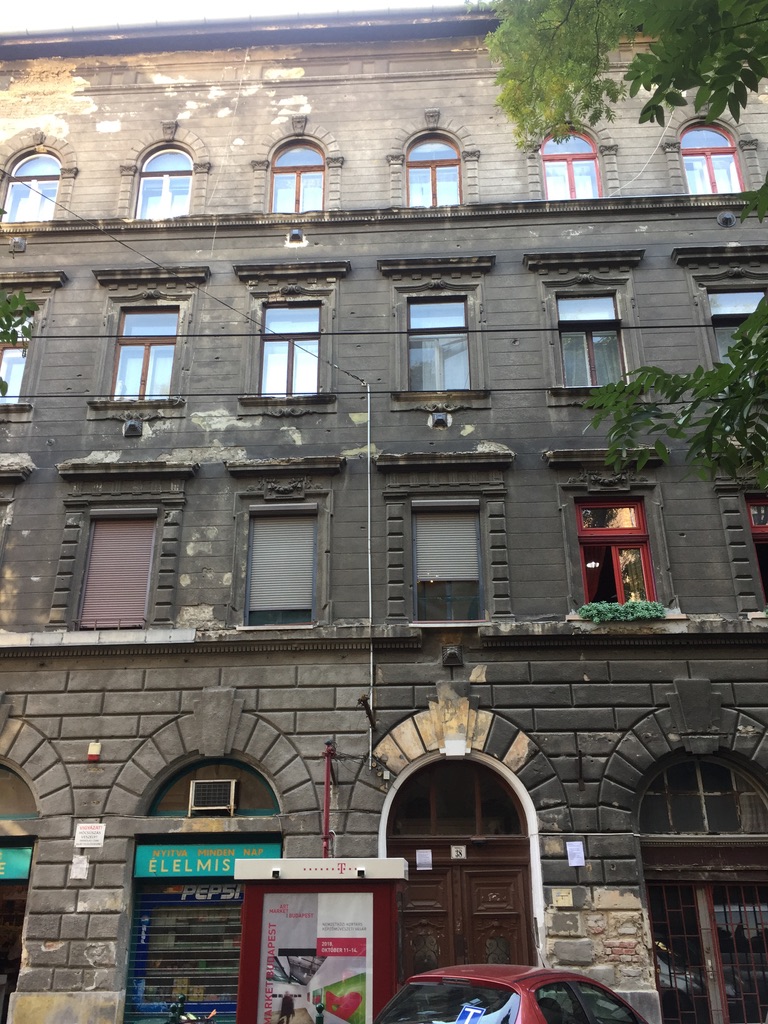
When we arrived in Budapest, the first place we visited was my grandmother’s place. She had a tiny one bedroom flat in Kiss Jozsef street on the Pest side of the twin city of Budapest. The building was an austere three storey grey block of flats built in the early 1900s. An ornate black metal door led within to a cobble-stoned interior courtyard. The wall opposite the entrance had no windows and completely overshadowed the common area. It was pockmarked with bullet holes exposing the render to moisture and decay. These gouged holes were still visible in 2018 when I last visited the site. As I ran my hand along the wall, my fingers traced the wounds from long ago. The battle scars of WWII and the 1956 uprising still bore witness to the street-by-street fighting that took place over seventy years ago. I look at the yellowing photos of my grandmother standing at the entrance to her flat and see that nothing has changed since I was there as a five-year-old child.
When my father and I arrived in 1965, my grandmother was overjoyed to see us. She shared her small flat with her lifetime companion, Panni, since divorcing her husband well before the war. The two women had shared their lives for over thirty years. I don’t remember much of Panni, except that she was taller than my grandmother and paid me no particular attention. My grandmother, on the other hand, doted on me and made paper-thin crepes by dozen because it was my favourite dish.
There was not enough room for my father and I to stay at their place. So my father left me with my grandmother while he must have found alternative lodgings. After he left, the little flat became a tomb. My grandmother spent hours in the kitchen or in her bedroom. I sat idly at the table, looking through the double glazed windowpanes to the courtyard below. Bright pink cyclamens were wedged between the two layers of glass. There was silence buzzing in my ears, interrupted only by the tick, tick, tick of my grandmother’s alarm clock. My arm stretched out towards the pink buds but my fingers only brushed against the cold glass.
There was nothing to do at my grandmother’s place. No toys, no books, no television and no-one to talk to. It felt as if I sat there for weeks on end but it probably was no longer than a week or two. My grandmother and Panni took my plaits out and brushed my hair before my father came to get me. It must have been full of knots because I can still remember the two women arguing and pulling at my hair while I whimpered and pleaded for them to stop.
When my father arrived, there was a frank discussion between the three adults.
‘I’m too old to be bringing up a small child,’ my grandmother said. ’Stephen, look around, there’s nothing here for her. We’re not set up for it. She needs to go out and play, be with other children, surely you can see that,’ Panni added with an expansive gesture.
My father had no choice but to find somewhere else for me to stay.
The long Christmas holidays came to an end, and it was finally time to start school on the first of February, 1972. I hadn’t been to school for what seemed like ages, and I was looking forward to meeting children of my own age. In my mind, I thought school in Australia would be similar to my experiences of education in England. As I was only eleven, I was to enrol at the local primary school in grade 6. My mother, however, thought otherwise. She marched into the Education Department offices and argued her case. In Austria, I had already attended high school and therefore, at the very least, I should start in Form 1 or what is known as Year 7 now. What she failed to tell them was that Austrian primary school only went for four years. She was loud, self-righteous and refused to leave until she was given the answer she was after. I stood next to her in silence, head slightly bowed overcome by embarrassment and shame.
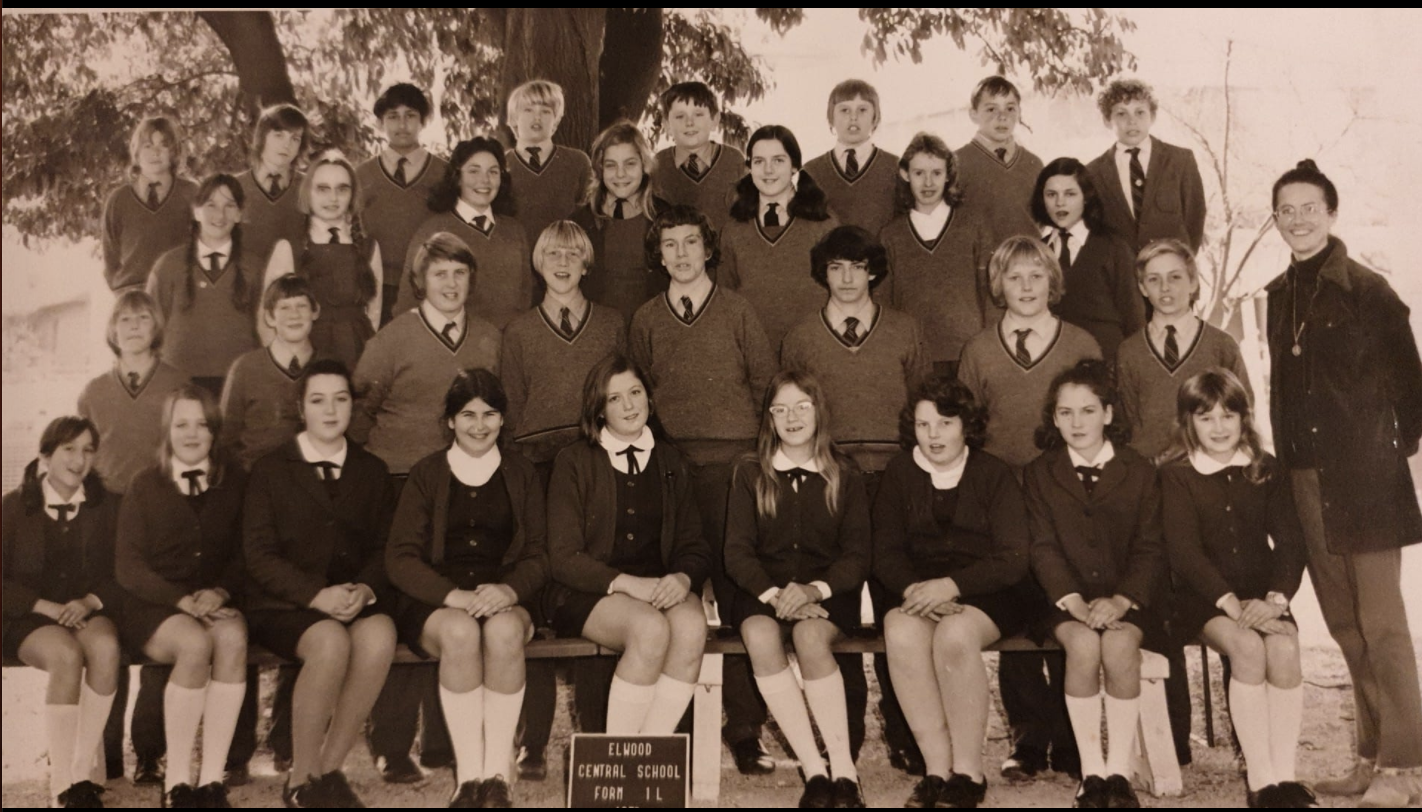
I was the youngest in my class in Form 1 at Elwood Central. Mrs Mac was our teacher and I remember her as a kindly woman whom I looked up to. She had long, dark brown hair which she wore in a thick plait to one side. I found the asymmetry of the style fascinating and tried to get my hair to sit like hers but only in front of my dressing-table mirror. It never looked quite as stylish. Yet for all her kindness, she did not understand the enormity of her actions on a child new to this country.
‘What’s your name?’ Mrs Mac asked on the first day, once I was settled at a desk.
‘Angela,’ I replied.
‘Let me see,’ she said, as she examined the roll.
‘Ah, there you are. But it says your name is Victoria.’
‘Yes, but nobody calls me by that name. Everyone calls me Angela, it’s my middle name,’ I explained.
‘I see. But we already have an Angela in this class. So you can be Victoria. It is such a pretty name and it is much easier that way.’
‘Yes, Miss,’ I replied.
It would never have crossed my mind to argue with a teacher or insist that she called me by my rightful name. I accepted her power to rename me but didn’t know how to react to it. I knew I was named after a Russian great aunt whom the family called Vicki but I was also called Angela after my paternal grandmother. It had been a compromise between my parents. My mother named me Viktoria in honour of the Russian aunt and my father named me Angela in honour of his mother. I tried on the new name but it felt stiff and formal like a starched shirt that chafed under the chin. And it chafed for a long time.
Eventually, in a bid to fit in, I shortened my name to Vicki. It didn’t really work. The name was never going to make a difference in how the other children perceived me. To the kids at Elwood, I was a ‘wog’ who tried too hard. I wasn’t going to fool them with a shortened version of my name. What they saw was a goody-two-shoes who wore her hair in two neatly braided plaits, who sat with her arms neatly folded and whose eyes never left the teacher. They watched in amazement as I stood next to my desk when called upon to speak. While I spoke quite well by then, my slight English accent at the time must have sounded imperious as though I was looking down on them. In my eyes the boys in that class were raucous, mischievous and slovenly. To them, I was fair game. They laughed at my plaits, my demeanour, my accent. Even Mrs Mac seemed embarrassed by my behaviour.
’Sit down,’ she said as her right hand made a downward motion. ‘You needn’t stand when you answer me.’
For my part, I couldn’t understand why she wouldn’t want me show her the respect she deserved. As far as I was concerned, she should have made the boys stand up when they spoke instead of letting them lean on their elbows or slouch in their seats.
School was a bit of a mystery to me in those early days. We wore uniforms, which I was used to from England but they still felt quite foreign to me. In any case, they weren’t anywhere near as stylish as the ones I wore in London. Then there was the schoolyard which was divided into a boys’ and a girls’ side by the width of a painted white line. At times it seemed like a battle-line with girls standing on one side yelling at boys and boys standing on the other, swords drawn. On Monday mornings we assembled on the concrete playground to sing God Save the Queen and teachers walked between class lines to check on our attire. School seemed regimented, governed by indiscernible rules yet lax as far as learning and behaviour in class was concerned. It was confusing and all I ever wanted to do was to fit in.
At first, Miss Mac sat me next to Janet who would become a life-long friend. But at times, I had to sit next to a girl called Dianne who had cerebral palsy. I had never encountered a person with a disability and I am ashamed to say I judged her as harshly as all the other children in the class. I was repulsed by her snot bubbles and drooling, neither of which she could control. It was difficult to understand her when she spoke and she was shunned by all. It took me many years to understand that the reason I had never met a handicapped person in Austria was because they were hidden out of sight in outdated institutions. At the time though, it felt as if I were made to sit next to Dianne as a form of punishment. We were both outcasts but I felt no solidarity.
Schoolwork wasn’t difficult, only frustrating. My teachers were more concerned with changing my European handwriting style than with teaching subject specific content. Together with four or five other children from different grades, I went to ’Special English’ classes with a delightful young teacher whose name I have unfortunately forgotten. She made me write out the alphabet and practice spelling words. Her classes were inclusive and kind but I’m not sure we learned much. Going to her room was always a welcome break from the shenanigans in class. We could relax, speak honestly and were accepted for who we were. As a group we desperately wanted to say thank you to her for how she made us feel. We wanted to give her a birthday gift but she wouldn’t tell us the date. I came up with the idea of picking a day which we would celebrate as her birthday. I would ask my father to make her a leather handbag and some of the others would bring party foods. Once the bag was finished, we wrapped the gift and presented it to her singing Happy Birthday. I remember she was completely overcome by our pretend birthday party, and we were thrilled to have made her happy.
Of all my classes, maths presented the greatest problem. I was quite fast at working out ‘sums’ in my head but the teacher couldn’t follow my logic when written down. I could do long multiplication and division but only the way I had been taught in Austria. I was made to write my numbers without curling my 9s and crossing my 7s. My 1s had to lose their initial upward stroke. I wasn’t allowed to use my perfectly logical method for multiplication or division, and I couldn’t follow the system used in Australia. I wasn’t allowed to use my method for subtraction either, but it was the only way I could get the answer right. Somehow, I passed Mathematics at the end of the year but by then I lost all joy for the subject.
The academic side of school was never my problem. The issue I had was fitting in. I had made a few friends including Janet, who was one of the first girls to speak to me and invited me to play. For the most part, however, there were taunts that came from the boys at first and then extended to the tough girls when we moved to the high school across the road the following year. I could never understand why some children went out of their way to be cruel and make life a misery. All I wanted to do was to go to school, learn, play and walk home safely. But I quickly learned that children all over the world created a pecking order and that I was easy to peck.
‘Wog! Why don’t ya go back to where y’came from?’ This was the standard war cry fifty years ago as it still is in its various forms today.
Then there was ‘Calico boondi. Nigger lover. Why don’t ya Nugget yourself black?’ This was a half-sung, oft repeated taunt because I had crossed the ‘colour line’ and made friends with kids who had come to Australia from India.
Scooby became my confidant, my friend, my protector. He listened, never judged and loved me the way I was. He didn’t even care if changed languages mid-sentence. I spent hours with him at the park, telling him my woes but also delighting in his company. While we were together, hours, minutes, seconds were of no essence. I could forget about the kids at school, forget that everything was new and strange. While I was with Scooby, I could simply be.
There wasn’t much point in talking to my parents about my problems at school. Both thought I was too soft and needed to toughen up.
‘Just laugh into their ignorant faces,’ was my mother’s sage advice.
‘You need to fight back,’ was my father’s. ’They’ll soon leave you alone after that.’
But I was soft and hated confrontation. All I ever wanted was to blend in and be like everyone else. I couldn’t follow my parent’s advice, so I stopped telling them what was going on. I retreated from my parents and attempted to sort everything out by myself. What they inadvertently taught me was never to admit how miserable I was feeling and never to look to adults for help.
My mother’s first job in Australia was at the ABC in Ripponlea back in 1972. She worked at the canteen where she served meals, made cups of tea, and cleared tables. My mother often took me to work so she could keep an eye on me. Naturally, I was bored and began chatting to the staff when they came down for their break. It was there that I met Leigh, a young university student doing a work placement over the summer holidays. She took a liking to me, and we spoke about many things that summer, including our love of dogs. Leigh lived with her parents in Ferntree Gully and owned a kelpie.
‘Kelpies are Australian dogs. They’re the best,’ she said. ‘Would you like to come and meet him?’
‘Would I ever!’ I said
‘I’ll have a talk to your mum. Maybe you could come over this weekend to meet him,’ she suggested.
Leigh kept her word and arrived the following Saturday to collect me in her Mini Minor. My parents hadn’t owned a car since I was five and I felt grown up and important sitting in the front seat. At that time, I had seen very little of Melbourne and only knew the places in my immediate environment, places I could walk to easily. We drove for what seemed like hours, down straight roads and through endless suburbs. Finally, we came to a house up on a hill. The driveway was steep and treeless. A sleek brown kelpie ran to meet us, barking and nipping at the wheels. When Leigh stepped out of the car, he could barely be contained. His tail wagged his whole body. This dog was loyal, smart and a whole lot of fun. I wanted a dog just like him.
Leigh and I hatched a plan to get a rescue pup.
‘I won’t be allowed to keep it, Leigh’
‘Leave it to me, I’ll talk to your mum.’
I wasn’t so sure. ‘What if she says no?’
She laughed. ’I’m pretty good at convincing people.’
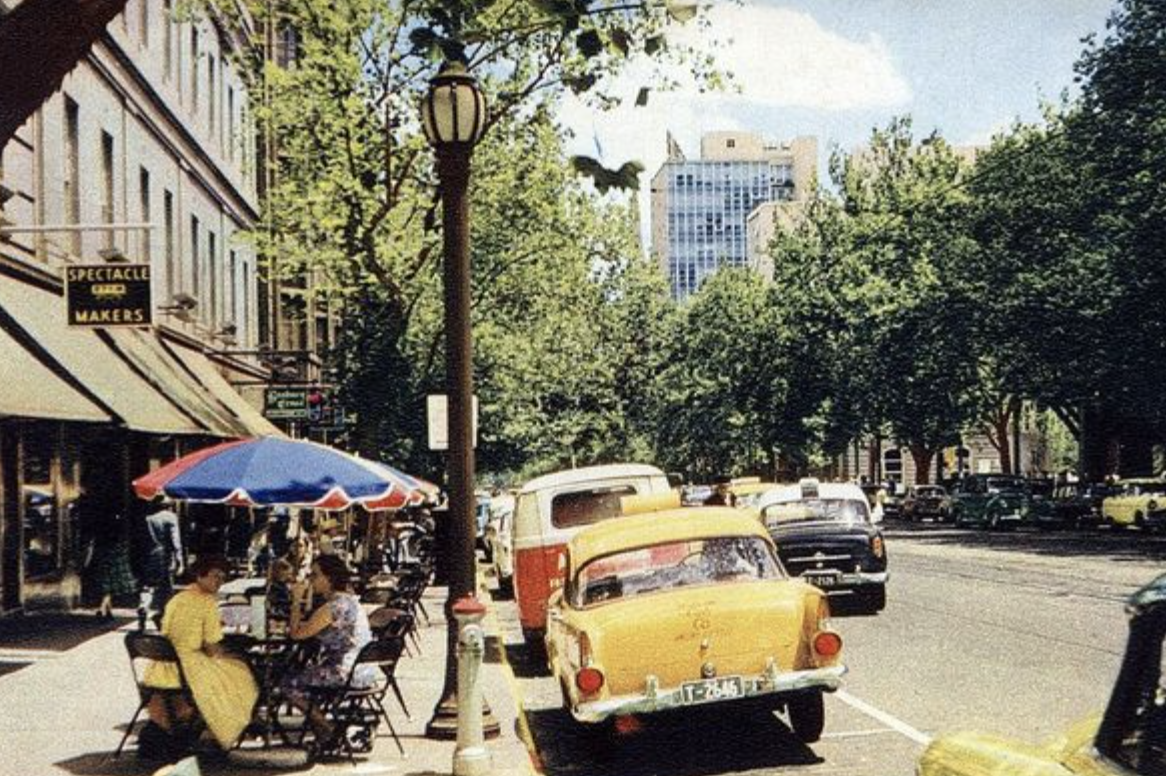
Leigh worked her magic on my mother, and I was finally allowed to go with her to the Lort Smith animal home in North Melbourne. We drove from the ABC during one of her long breaks. Going in the car with Leigh always felt like an adventure. We drove down St Kilda Road all the way into the city, then past Queen Victoria markets and up Flemington Rd. Everything was so new to me. The modern office blocks on St Kilda Rd, Flinders Street station with its open mouth reminding me of the entrance to Luna Park on the St Kilda Esplanade and the smells wafting from Victoria markets were all new sights and sensations. I could have driven around town with Leigh for hours, but I was anxious to get my new pup.
When we finally arrived, we were taken to where dogs were kept in what looked like large cages. The sound of dogs barking, whining, and howling echoed along the concrete walls. The result was a cacophony of misery. Walking along, I felt as if I were a warden in a prison, just like I had seen on our black and white television set. It was a depressing scene to witness. Dogs came to the front of their cages and pleaded with us for their freedom. I found it hard to meet their gaze. And then there was the foul odour of too many dogs in a confined space. It smelled like wet dog, excrement, and fear. It may have been cleaned regularly but the smell crept into every corner and was impossible to eradicate.
Finally, we came to an enclosure teeming with tiny black and tan pups. The warden with the key opened the gate and we were let in.
‘Go and choose one,’ Leigh said. ’Take your time and choose the one you like best.’
There were about ten puppies in the enclosure. It was feeding time. The pups all ran towards the trough and the strong ones pushed the weaker ones aside. One small pup with a protruding belly was trying to get to the food but was not strong enough to muscle in. It looked sad and forlorn. My heart went out to that pup.
‘This is the one I want,’ I said, pointing at it.
‘Are you sure?’ Leigh asked.
‘Yes, this is the one that needs me.’
The pup was taken for a check-up at the veterinary hospital attached to the facility. The vet looked at us.
‘Are you sure you want to take this one? It looks as if he could have distemper, and he may not survive,’ he said gravely.
‘He is the one I want.’ I said with tears welling in my eyes. ‘If he dies, at least he will be loved until that time.’
The vet looked apologetically at Leigh.
‘We’ll take him,’ she said.
‘Look, if he dies in the next couple of weeks, we’ll give you another one,’ said the vet. What will you call him?’
‘Scooby,’ I said. ‘Like Scooby-do.’ It had been my favourite cartoon when I lived in England.
Leigh paid not only for the dog but also for his vet bills. It must have cost her a packet. Despite everyone’s concerns, Scooby pulled through and lived to a ripe old age.
My mother stopped working at the ABC and Leigh went back to university. After that summer, I lost contact with her. Even now, so many decades later, I wish I could express my gratitude to her for the kindness and generosity she showed to that little migrant girl in her fledgling months in Australia.
The year after my father died, I returned to Elwood High School to complete my HSC. I knew it was the only way forward. My father had instilled in me the belief that education could change the trajectory of lives. He had always wanted to go to University, but the war had intervened. By the time WWII was over, it was too late for him to realise this dream, but not for his younger brother. My father completed an apprenticeship, worked hard, and helped my uncle get his education. This was how uncle Lajos became a professor of history at Budapest University and my father a humble leather worker. I knew what I had to do to get on in life.
A kind teacher at school, who barely knew me, decided to put my name forward to the Returned and Services League for a $100 scholarship. In 1978, that was generous sum of money.
‘Your father fought in the war, didn’t he?’ she asked.
‘Yes Miss, he was shot in the knee.’ I answered enthusiastically. She ticked the ‘veteran’ box on the form.
Elwood High School only ever had assemblies for special occasions, as our hall had burnt down in 1975. It was difficult to line up over a 1000 students on the basketball courts to listen to speakers. It must have been an Anzac Day assembly as a retired major gave a speech which most of us couldn’t hear at the back. We were getting restless standing there for what seemed like a very long time.
This was when I felt a tap on my shoulder. The kind teacher, whose name I can’t remember, was signalling for me to follow. On our way up to the makeshift stage, she suddenly stopped and turned to look at me.
‘Where was your father from, again?’ she asked.
‘Hungary, Miss,’ I replied
This was followed by a long pause as she searched my face. ‘So, so he fought in the war?’
‘Yes, Miss.’
‘And Hungary was, Hungary was… whose side was Hungary on?’ she asked, suddenly realising she was more than a little rusty on her knowledge of history.
‘Sorry, Miss?’ I wasn’t sure what she was asking.
‘Oh, never mind. Just go up and accept the cheque. It may be best if you don’t say much while you are up there,’ she cautioned.
I went up, shook the Major’s hand and thanked him. It was a generous sum and it made a considerable difference to my ability to complete the HSC.
My first part-time job was in the deli section of Coles in Balaclava. But by 1976, I was looking for something more exciting. When I heard that the new McDonalds in St Kilda was looking for casual staff, I immediately applied. My friend Sharmaine joined me in working there, and for a while it was fun.
One Saturday night, our shift finished at seven and it was already getting dark outside. We weren’t looking forward to walking home.
‘There’s no dance on tonight, is there?’ I asked.
‘None we can get a lift to. Everyone’s already gone out. This’ll be one boring Saturday night!’ Sharmaine said.
We were just about to cross the Esplanade when we heard a couple of guys call from an ancient two-tone Holden.
‘Where ya girls off to?’ the driver hollered.
Windows wound down, elbow leaning out the window, the driver looked us up and down. It wasn’t the most original pick up line, but our feet were sore and we were bored. A lift was appealing and we felt safe enough together. We casually walked over to the car and saw two young guys, probably only about two years older than we were. They were as nervous as alley cats hanging out in the wrong neighbourhood. They clearly didn’t come from St Kilda.
‘You girls doin’ anythin’ tonight? You wanna go out somewhere?’ the driver stammered as we approached. He had shoulder length mouse-brown hair and wore a checked flannel shirt. Not my type, I thought, but what was there to lose?
’Nothing planned so far,’ Sharmaine answered.
‘Why don’t you girls jump in and we’ll go for a ride. Wherever you want,’ he added quickly.
‘My dad won’t let me go out with boys unless he’s met them,’ I said. ‘But if you drive me home and say hello to him, I’m sure I can come.’
‘Sure, jump in. I’m Steve and this here is Glen.’
‘Hi,’ we said, giggling as we scrambled into the back seat.
We drove to my place first. I opened the door and invited the boys in.
‘Papa, this is my friend Steve,’ I said.
They shook hands. I was hoping Steve’s handshake was firm because my father judged a person’s character by their handshake. It looked as if he had passed muster.
‘We ran into these boys from school coming back from work,’ I lied.
’And we’d like to go to a dance. They’ll bring us back by midnight.’
‘Won’t you Steve? Just nod will ya, I just told him we were friends from way back,’ I said turning to Steve. He nodded dutifully.
‘Sharmaine’s dad already said she could go and he is very strict about who she goes out with. Please Papa.’
‘Not a stroke after midnight,’ he said. ‘I’ll wait up for you.’
‘You’re the best!’ I said and kissed him on the cheek.
This was one of the few advantages of having a father who could not speak English. I could pull the wool over his eyes.
We had persuaded one parent, now it was Mr Keogh’s turn. To my surprise, Sharmaine talked her dad around quite easily and we were ready for a night on the town.
‘Where d’ya wanna go?’ Glen asked. They were from the outer suburbs and completely out of their depth.
‘Let’s go to the Outpost Inn,’ I suggested.
It was my favourite place to go. The Outpost Inn was a basement folk venue at the top end of Collins Street. It was a cool place to hang out and listen to various folk singers. There were three or four windowless underground rooms, painted black with a small makeshift stage at one end and couches or cushions strewn around the room. There was always more than one artist performing and you could wander from room to room to listen to whoever took your fancy. Someone was always smoking a joint and the atmosphere was quite mellow. It was the coolest place to be on a Saturday night, if you were into that scene.
The Outpost Inn was run by a crazy Russian called Stefan. He was an imposing figure with a full beard and a shock of black hair. He had a striking resemblance to photos of Rasputin. I always felt safe because I knew Stefan could sort out any problem. He wasn’t the kind of person anyone would willingly take on. It seemed like a great place to take a couple of suburban boys.
Within the first twenty minutes we realised the boys had the completely wrong impression of the venue. It was clearly the first time they had witnessed an alternative scene.
‘Check out the black walls, Glen,’ said Steve, nudging him with his elbow.
‘Smell that will ya,’ was Glen’s reply. ‘You reckon it’s what I think it is? We’ve scored us some wild chicks, man. Which one do you want?’
Sharmaine and I glanced at one another. This had been a BAD idea.
‘Just going to the bathroom,’ Sharmaine said and pulled at my sleeve. We quickly made our way to the toilets out the back.
‘I don’t think this was a good idea,’ Sharmaine said. ‘They think we’re the kind of girls who will go all the way with them. I know that’s what they think. Glen keeps staring at my boobs.’
I had the same impression. ‘You know, we could just leave them here,’ I said, ‘C’mon, I know a back way out.’
And that’s what we did. We we left them standing there waiting for us to return. We fled like spooked cats, laughing until we cried, running all the way down Collins Street, without stopping. When we reached Swanston Street, we doubled over laughing, caught our breath, and waited for a number 67 tram to take us home safely.
‘Papa, I’d like to have a party for my birthday,’ I said as we sat on our beige vinyl couch one night watching Matlock Police.
‘That’s fine, you had one last year,’ he said not looking away from the screen.
‘No, I mean I want a party at night, like other kids in my class have had.’
‘I’m sure we can come to an arrangement.’
‘Can we Papa? I don’t want to be rude, but it wouldn’t feel the same if you were here.’
‘Well, I can stay in my bedroom.’
‘Can’t you just go out for a while? ‘
Our conversation went back and forth for quite a while until he finally relented He was going to go to a pub in St Kilda and he’d walk home after it closed. We agreed that he’d come home by about eleven.
I was over the moon. Finally, I’d have the house to myself and we could have a party with alcohol and no parental supervision. I invited all my friends, many of whom would not be able to come because their parents wouldn’t let them. Nonetheless, about fifteen turned up, including my friend Stephen who also had Hungarian parents to contend with. He was a tall, heavy set boy with impossibly curly hair, interested in Science and Maths, a bit of a geek before that word was invented. He didn’t dance but stood around happily drinking and bobbing his head to the music. Someone had brought a small stash of marijuana and passed a joint around. I became giggly and happily high and, I must admit, pretty pleased with my party.
When I heard a knock on the door, I hoped it wouldn’t be cops. Someone went to the door and the next thing I knew, about 8 boys I didn’t know were walking through the house. They may have been a year or so older and they thought they’d have a little fun at my expense. They only stayed about 10 minutes but in that time they trashed the place.
‘Look what we’ve got here?’ One of them crooned. ‘A painting. Now isn’t that the sweetest thing?’
He took the cigarette from his lips and squashed it on the painting above our couch, leaving a nasty black burn mark in the middle of the pastoral scene.
‘Don’t!’ I cried, but they laughed and made their way to the bathroom where they filled the bathtub and let it run over. A waterfall cascaded down the tiles and soaked everything in its path but worse was yet to come. On their way to the kitchen, they had to walk through my father’s workshop where he kept various rolls of leather, rivets, sewing machine spools with different coloured threads, thick glue and leather working tools. They opened the neatly stacked jars, emptied rivets, hooks and buckles on the floor and stomped on anything they could to ensure maximum destruction. Then, when the leader of the group got bored, he simply said, ’Let’s go,’ and the others followed him out.
Stephen stood sentry at my bedroom door, right next to the entrance. His body filled the doorframe. As the gatecrashers were filing past, one of them took a swing at Stephen, punching him right under the chin. He fell back making a sickening thud as he landed. I raced in to see how he was but I couldn’t stir him. As we didn’t have a telephone in the house, I made the decision to leave my friends in charge to make a phone call for an ambulance. I took five cents for the call and walked out into the darkness on my own, crying.
I had made a right mess of things. I should never have asked my father to leave the house and now I was paying the price. What would he say when he returned?
I made the phone call and walked back to the house. The ambulance arrived and my father walked in just as they were bending over Stephen on the floor.
‘I’m so sorry, Papa,’ I stammered between tears.
A paramedic turned to my father and said, ‘he’ll be right mate, but I wouldn’t move him tonight. Let him sleep it off ’til the morning.’
‘What are they saying?’ My father asked.
‘They said he should stay the night. But, but what about his parents?’
‘I’ll go and phone them,’ my father said and he walked back out into the night.
One by one my friends left, heads down, avoiding my eyes. I dragged my mattress onto the floor and Stephen crawled onto it. I lifted his head and put a pillow under his head and a blanket over him. And then I waited for my father to return.





 From Quill to Quote