The heart

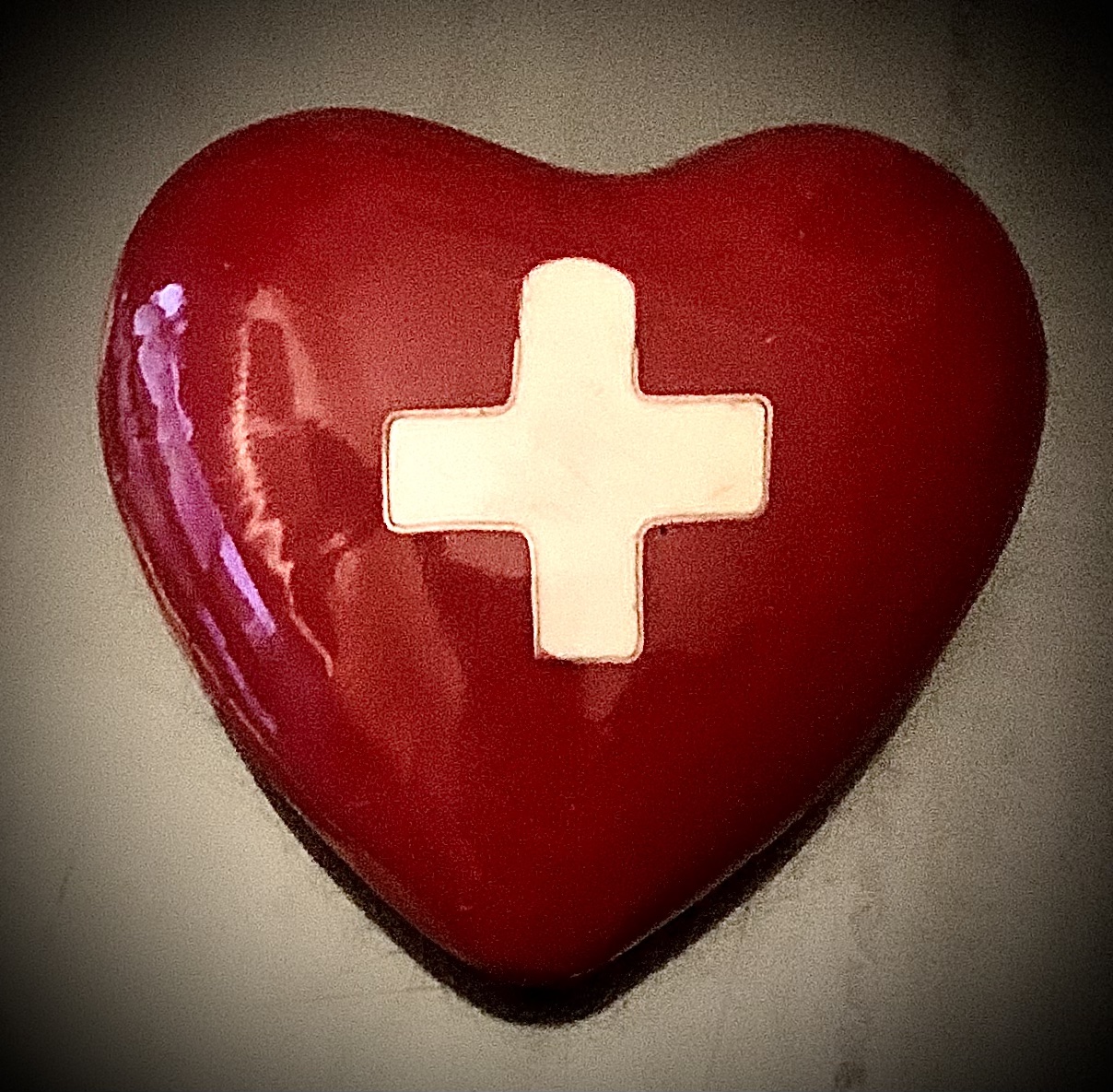
A beating heart keeping us alive. From the moment we are born, a steady rhythm. Providing a cadence to our emotions, whether joy, love, fear, or anger, each has its own beat and the heart keeps score.

Last week, I was reminded of this on a visceral level when a doctor voiced concerns over my daughter’s heartbeat. Dread flowed through our veins, finding its way to both of our hearts. Tests and speculations began. An undiagnosed hole in the heart? Arrhythmia? Will she need a Pacemaker or other device? Long days of waiting for an ECG then a 24-hour Holter monitor. More waiting for results.
In my worst moments I imagined losing her. I envisaged a hole in my heart in the place she currently occupies. As mothers we know our children never really leave our bodies, we carry them within us forever more. I thought about the hole in her heart where her father’s love once flowed freely, a hole which can never be surgically repaired and will ache for a lifetime. I also remembered a robust young boy I taught years ago, full of life and laughter who collapsed on a basketball court unable to be revived as his heart stopped mid-flight. I will never forget the funeral held in the very same hall, filled with teenagers coming to terms with mortality for the first time. Nor will I forget the grieving mother and my own heart breaking at the sight of her. A life shrouded in sorrow and an abyss tearing her heart asunder.
Then, the much awaited call came through. My daughter was instantly relieved by the doctor’s news. She may have an unusual heartbeat, but it doesn’t pose any danger. If necessary, she can take medication in the future, but for now she can relax. Her heart is functioning as it should.

As for my heart, the tightness releases the moment I hear the news. No matter the distance, our lives remain intertwined.

Two mothers

Taking a shortcut through the back lanes of Adelaide, an Aboriginal woman approached me holding two paintings. It was late afternoon and she looked tired as if she had been waiting for someone for a long time.

There was a hopeful look in her eyes, but her body language radiated defeat. I stopped, knowing full well that she was going to ask for money, but I couldn’t walk away. I needed to bear witness to this woman’s story. She began by telling me about her son whom she needed to visit, a good man, now in need of money to pay some bills. What I heard was a plea from one mother to another. It didn’t matter how old her son was, as his mother she would do anything for him in the same way I would do anything for my daughter.

She offered me one of two paintings she had completed; I could choose. She wanted a fair exchange, her pride demanded that. When I told her that I had no cash – who does these days? – she suggested an ATM not far from where we stood. I assured her I’d return but she walked with me anyway, making certain that the exchange would take place.

It was hard to choose a painting, they were so different to one another. One was of animals on an ochre background while the one I eventually chose, was painted in vibrant colours and depicted meeting places and possibly a ceremonial site in the centre. I felt the one I chose was the more feminine and would remind me of her strong character.

The painting and that tiny glimpse into her life is now hanging in my bedroom. Mother to mother, I think of her often and wonder how she and her son are getting on. And I wonder whether she knows that she has touched my heart.

Writing

I am at that difficult moment in a writers’ life when a manuscript is ready for publication. I have researched suitable publishers, made note of their precise requirements, and will now write my biography, a synopsis of the story and attempt to convince them that I have more than one book in me.

Every time I think I have come to the end of a writing process, new challenges present themselves. Writing a book requires a different skillset to editing or writing a synopsis. I’m learning on the fly. There are no guarantees that my hard work will pay off or that the manuscript will find a home beyond my desk drawer. Yet I am driven to keep trying. I have even started on my next project which is my first attempt at writing a novel.

At work, colleagues talk about television shows or movies they have seen. They spend their time gardening on weekends, or talk about BBQs they have attended. I smile and nod but have nothing to contribute. While they relax or socialise, I sit at my desk and write – often late into the night. They can’t understand why I would choose to keep working after a day at the office where I also work on a computer. On the other hand, I can’t understand why people wouldn’t want to use their time to create rather than simply consume. That’s not to say that I don’t enjoy movies or that I don’t lose myself in books. Of course, I do. However, I also need to produce something tangible to feel fulfilled.

I have talented friends who can paint or draw, and I marvel at their abilities. My daughter is a gifted musician, and my cousin a consummate stonemason. As for me, I have none of these skills. But I am passionate about language and words have always been my salvation.

A lifetime of accumulation

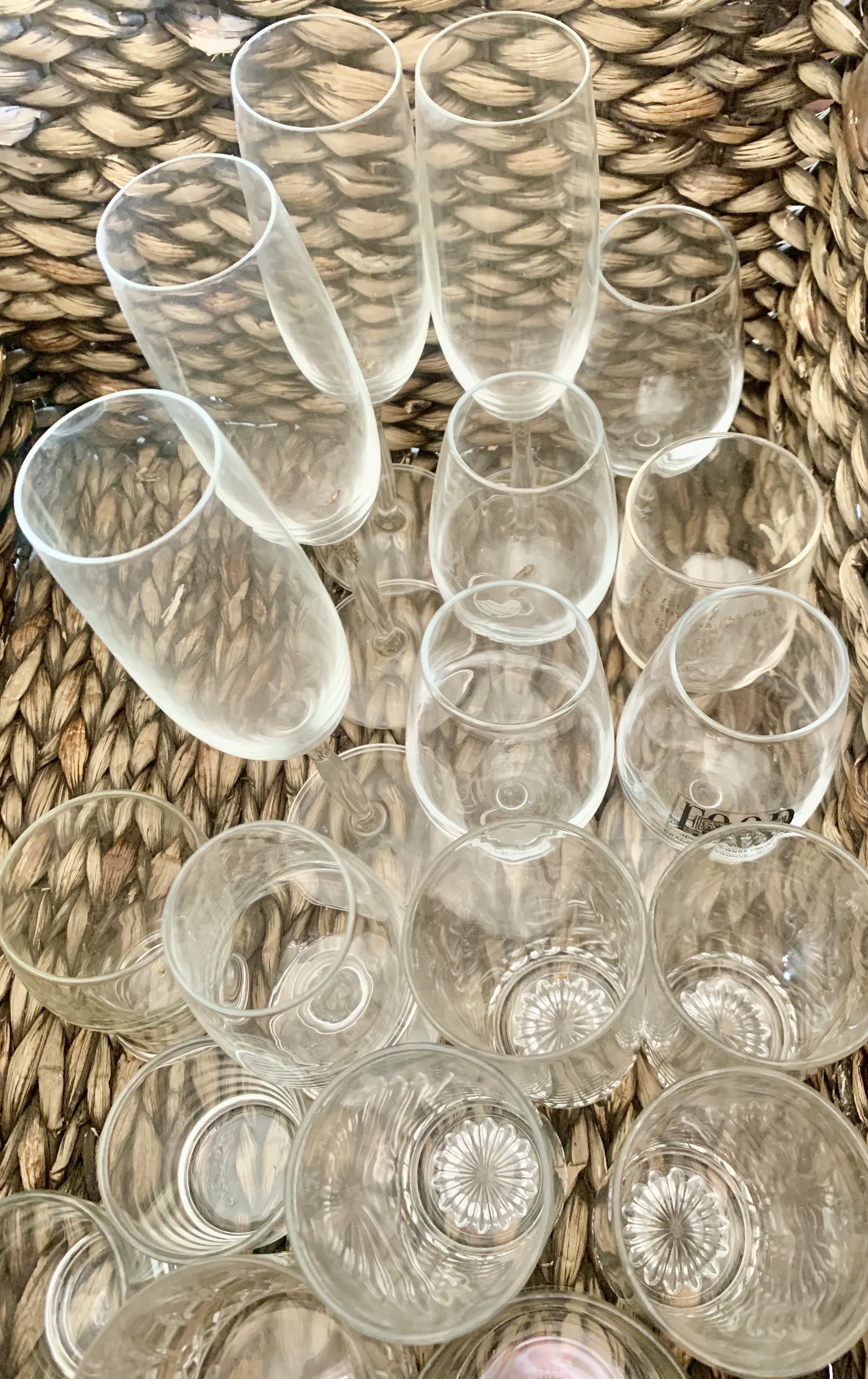
With each passing year I realise that I have accumulated more than I will ever be able to use. I have champagne glasses, plates, and platters galore, sheets, towels and tablecloths that have never seen the light of day. Many of these items have been given to me by generous friends who have looked for a perfect present and no doubt spent a pretty penny in the process. I am always grateful for their kind thoughts.

I have kept sentimental items which remind me of special places or times, and they make me smile when I notice them on a shelf as I walk by. These would be particularly difficult to part with and I am glad to keep them with me.

The more practical things I would happily give away, if only I had somewhere to take them. I have donated many items to Vinnies and the Salvos but they are now overflowing with donated goods. Even country towns recently ravaged by floods are asking people to stop sending donations. They have filled every hall available and are now facing the issue of trying to move the excess on.

One of the saddest things I have recently seen is footage of markets in Africa where women attempt to recycle clothes offloaded by wealthy countries. They call them ‘Dead White Man’s Clothes’ and try to sell the merchandise for a pittance. It seems nobody wants what we discard and all we have done is to shift the problem elsewhere.

I remember in my twenties we were thankful for every bit of donated furniture, crockery, and glassware. We weren’t choosy. We repurposed most items and it was a long time before we considered buying anything new. New things were expensive. There were no two-dollar shops, mass market imports hadn’t flooded the market yet and we had to make do. In many ways, I feel we were better at recycling simply because we had to be. I would have been ever so thankful for the things I am now trying pass on. And if I hadn’t wanted them, I would have known dozens of people who did.

So here I am with boxes of brick-a-brac I’d love to give away. But in an era of plenty, it is more difficult to give away than it ever was to accumulate.

Hot-desking

© Copyright Pierlite 2023

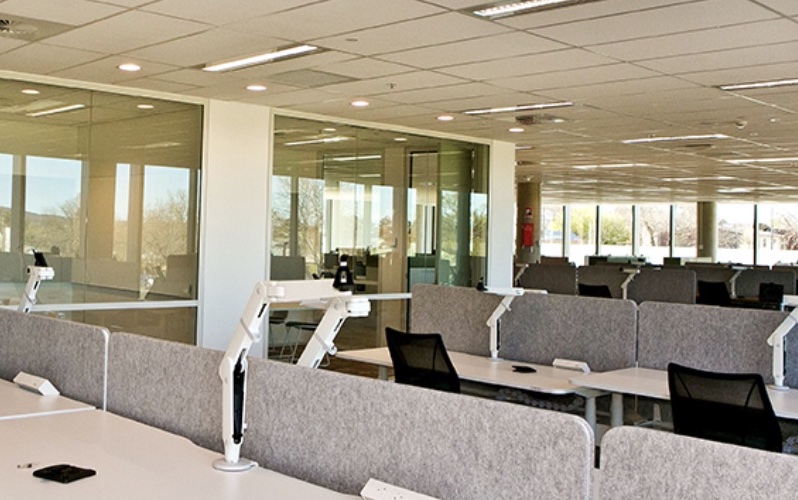
Whoever dreamt up open plan offices clearly had never worked in one. Add hot-desking to the mix and you have a recipe for disaster. ‘Our employees are our greatest asset,’ is the catch cry of many a workplace but it feels like ‘your call is important to us’ while placed on hold.

I work in an ostensibly beautifully designed office that must have cost the NSW government a pretty penny. It has state of the art kitchens on every floor, artwork in the hallway, real plants in every area, large television screens in the eating area and little nooks to for intimate conversations. It also has adjustable desks, expensive chairs, and some small bookable offices where people can go to have meetings or private conversations, if they aren’t already booked. On the surface, it is perfect.

Right now, many people are still working from home so that only a fraction of the desks are utilised. Our designated area is close to another NSW department which is quite separate to us. Most of their work is conducted on the telephone or Zoom calls, while most of our work tends to be either quiet computer work or online meetings. Both groups deal with sensitive and confidential information but due to the configuration of the desks, we can’t help but hear things that we really shouldn’t. It doesn’t help that one of the men ‘from the other side’ has a booming voice that travels several hundred metres. Furthermore, brevity is not a concept with which he is acquainted.

I have had to get used to wearing noise cancelling headphones (my own) to be able to get any work done at all. Sometimes even they aren’t enough, and I find myself downloading the sound of ocean waves to drown out the voices around me.

Then there’s the issue of hot-desking. It is meant to be ‘flexible’ or ‘agile’, but it ignores that we are creatures of habit who like to have our own spot. Hot-desking certainly hasn’t stopped booming-voice-man’s conversation reaching my ears. He, like most others, tends to sit at his favourite desk. This isn’t an issue at present as we have more desks than people in the office. The working from home phenomenon has meant that many people have chosen not to return as they find it more comfortable to be in their own surroundings. Let’s face it, at home you can sit at your own desk and have as many of your favourite items around you as you like. A bit like in the old days when you could have a photo on a desk, maybe some nick-nacks, and most importantly, the files you were working on. The computer was affixed to the table and at the end of the day you could walk away knowing full well that everything would be found where it had been left.

Now, however, I have to carry my laptop and my work mobile, store keyboard and mouse in a tiny locker with any papers I may need (remember the dream of the paperless office ?) and leave the desk pristine when I clock off. It takes a good 5-10 minutes to set up each morning and the same to pack up in the evening.

All the desks look sterile. There are no photos or personal belongings anywhere and it feels more like an assembly line than an office. The message is clear. We are all expendable. When I leave, no trace of my presence is left behind.